 Francja: dla restauracji i dań na wynos
Gotowi na kontrolę żywności. Codziennie.
In France, Chef Hygiene follows the arrêté of 21 December 2009 on food temperatures, the 14-hour hygiene training of Décret 2011-731 and EU rules, and the DDPP inspects restaurants.
14 dni za darmo · jedna cena za witrynę · bez umowy
Francja: zasady higieny żywności
Zasady na tej stronie są na razie po angielsku. Zostaną przetłumaczone na Twój język.
- Organ inspekcyjny
- Departmental Directorate for the Protection of Populations (Direction Départementale de la Protection des Populations, DDPP)
- Ocena publiczna
- Tak
- Języki w aplikacji
- Français, English
Twoja inspekcja
The DDPP carries out official controls in restaurants. The DGAL (Direction Générale de l’Alimentation) sets national inspection policy. About 52,000 inspections a year are made in commercial restaurants.
Inspections follow risk: higher-risk places are inspected at least twice a year. A small fault brings a warning letter. A bigger fault brings an official report, a deadline for corrective measures and a re-inspection. If public health is at serious risk, the DDPP can order closure, withdraw the sanitary approval or suspend operations.
Ocena higieny
Yes. Alim’confiance publishes every official inspection result online, free for the public. It has 4 levels: Très satisfaisant, Satisfaisant, À améliorer and À corriger de manière urgente. A result stays visible for 1 year.
„Prawo” to wiążąca reguła. „Oficjalne wytyczne” nie są prawem, ale inspektorzy ich oczekują. „Chef Hygiene domyślna” to wartość, którą aplikacja sprawdza, gdy żadna reguła nie podaje liczby.
Temperatury
- PrawoDishes prepared in advance (préparations culinaires élaborées à l’avance): +3°C or colder.
- PrawoRaw poultry and meat preparations: +4°C or colder.
- PrawoMinced meat and fresh fish products: +2°C or colder.
- PrawoIce cream and frozen minced meat and fish: −18°C or colder. Other frozen food: −12°C or colder. Chef Hygiene aims for −18°C and flags a freezer above −15°C.
- PrawoDishes served or delivered hot: +63°C or hotter.
- Oficjalne wytyczneCooling: from +63°C to below +10°C in less than 2 hours. Annexe IV of the arrêté makes this law in collective catering. Commercial restaurants use the same numbers as good practice from the hygiene guides.
- Oficjalne wytyczneReheating: no more than 1 hour between +10°C and the serving temperature of +63°C. This is law in collective catering and good practice from the hygiene guides in restaurants.
- Chef Hygiene domyślneFrench law sets no core cooking temperature. Chef Hygiene checks against 75°C in the centre, or 70°C for 2 minutes.
Kadra, szkolenia i zdrowie
- PrawoCommercial restaurants, cafeterias, self-service and fast-food places need at least one person with 14 hours of food hygiene training. The rules are Décret 2011-731 and the arrêté of 5 October 2011.
- PrawoYou do not need the course with 3 years of experience managing or running a food business. A recognised food hygiene diploma issued after 1 January 2006 also counts. The rule sets no renewal date.
- PrawoA worker with a disease carried by food, an infected wound, a skin infection or diarrhoea must not handle food (EU Regulation 852/2004). They must tell the business operator at once.
- Oficjalne wytyczneFrench law sets no fixed time off for sick staff. The operator judges each case and keeps the person away from food until they are medically cleared.
Alergeny
- PrawoThe 14 EU allergens must be declared: gluten cereals, crustaceans, eggs, fish, peanuts, soya, milk, tree nuts, celery, mustard, sesame, sulphites, lupin and molluscs (Regulation 1169/2011).
- PrawoFor food that is not prepacked, such as restaurant dishes, the information must be in writing (Décret 2015-447). It goes on, or right next to, the food, so there is no doubt which dish has which allergen.
- Oficjalne wytyczneA label, a menu note or a board can carry it. Staff can also explain it by voice if it is backed by written documents. Staff must be trained to give it correctly.
Kontrole bezpieczeństwa pożarowego
- PrawoFire extinguishers are checked at least once a year by a qualified person or approved body. Dates go on the label and in the safety register (registre de sécurité). Extinguishers are overhauled every 10 years.
- PrawoKitchen hood and ducts: cleaned at least once a year (Article GC 21 of the 1980 fire rules for public buildings). Grease filters are cleaned at least weekly, and every cleaning is written in the register.
- PrawoGas installations, connections and appliances are checked every year. Chimney flues are swept at least yearly. A competent body or person does the work and the register records it.
- PrawoElectrical installations are checked every year by an approved organisation or a competent person. The report goes in the safety register.
- PrawoEvery restaurant keeps a safety register. It holds the emergency numbers, evacuation instructions, staff training dates and reports of all technical checks and maintenance.
Dokumentacja
- PrawoEvery food business except primary production needs a food safety plan (Plan de Maîtrise Sanitaire, PMS) based on HACCP principles and good hygiene practice.
- Oficjalne wytyczneThe plan covers cleaning and disinfection records, goods-in forms with temperatures, fridge and cooking temperature records, equipment maintenance, staff training, pest control and logs of problems and fixes.
- Oficjalne wytyczneKeep verification and trend records for at least 3 years. Keep food safety control records for the product’s shelf life plus 6 months (DGAL instruction).
Oficjalne źródła
- Ministry of Agriculture: inspections of food businesses
- Alim’confiance: how it works and the four levels
- Décret 2011-731 (food hygiene training), Légifrance
- Décret 2015-447 (allergen information), Légifrance
- Service-Public Entreprendre: hygiene rules in restaurants
Checked
Ta strona zawiera ogólne informacje, a nie porady prawne. Sprawdź w lokalnym urzędzie.
Francja: Poradniki higieny żywności
Skonfiguruj Chef Hygiene
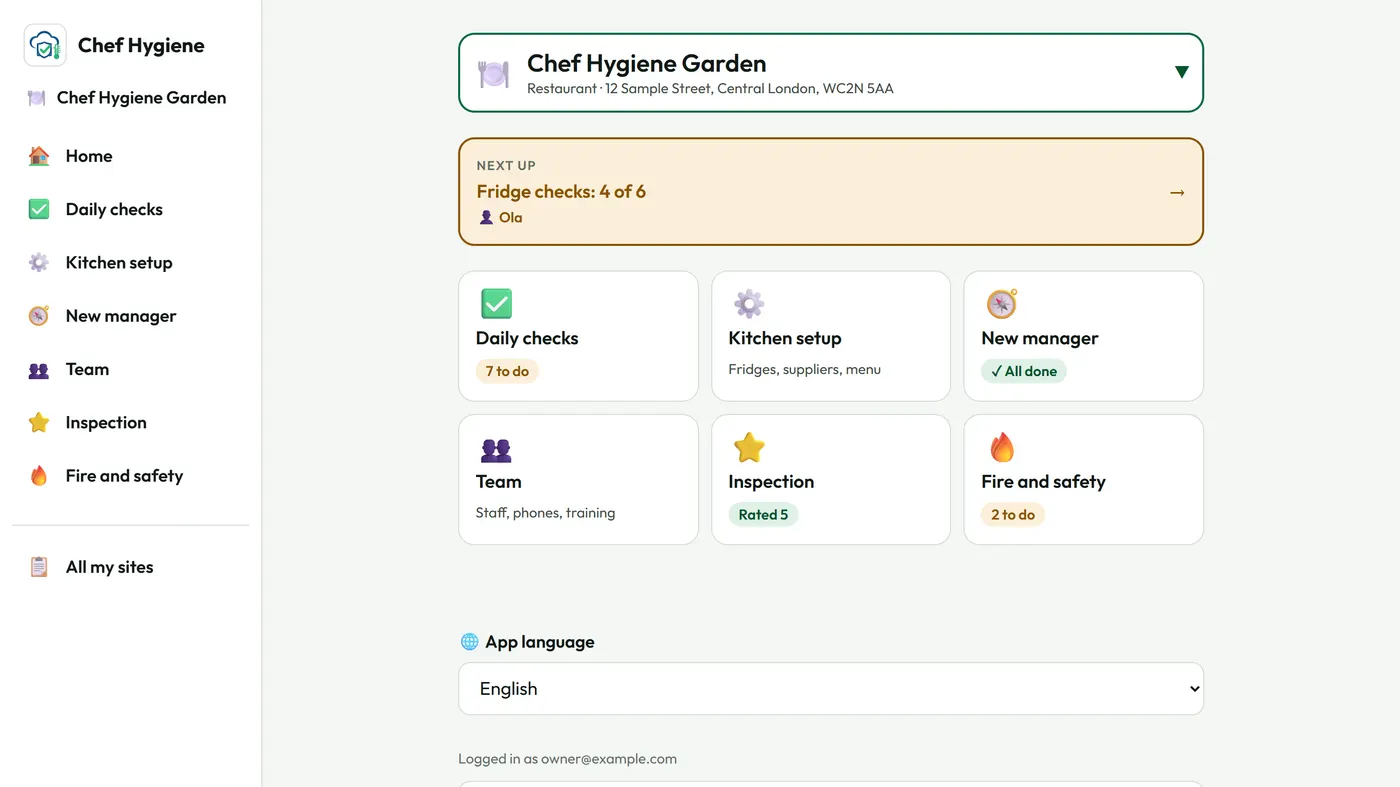
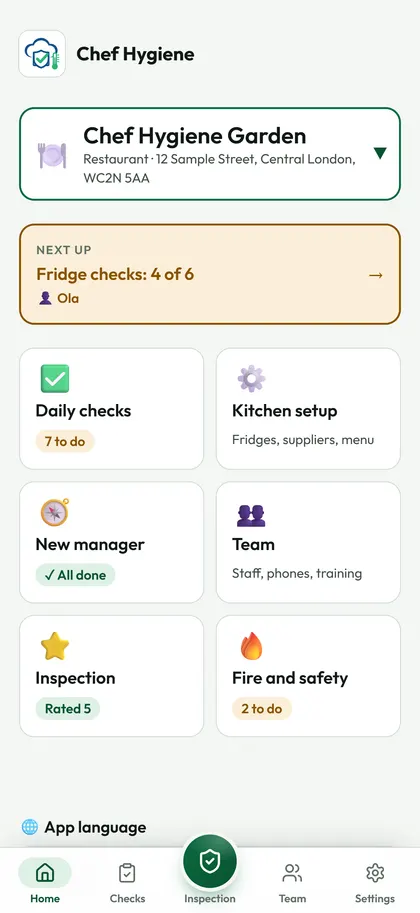
Utwórz konto, skonfiguruj wspólny tablet kuchenny i krok po kroku instaluj aplikację na telefonach swoich pracowników.
Francja: inspekcje żywności
Kto sprawdza Twoją kuchnię, jak przebiega kontrola i czy istnieje ocena higieny publicznej.
Francja: zasady dotyczące temperatury żywności
Temperatury żywności, które musi utrzymywać Twoja kuchnia, i zasady za nimi stojące.
Francja: alergeny
Co Twoja kuchnia musi mówić klientom o alergenach.
Francja: choroba personelu i szkolenie
Szkolenia, zasady postępowania z żywnością oraz sytuacje, w których chory personel musi trzymać się z daleka od żywności.
Francja: bezpieczeństwo przeciwpożarowe
Kontrole bezpieczeństwa przeciwpożarowego Twojej kuchni i częstotliwość ich przeprowadzania.
Francja: zapisy do przechowywania
Rejestry i rejestracje, które musi przechowywać Twoja kuchnia.
Francja: aplikacja Chef Hygiene.
Aplikacja ładuje te zasady do Twojej kuchni, sprawdza je pod kątem zgodności z zapisami i zachowuje dowód dla inspektora.
Inne kraje
 Wielka Brytania
 Irlandia
 Islandia
 Stany Zjednoczone
 Kanada
 Hiszpania
 Holandia
 Belgia
 Portugalia
 Niemcy
 Austria
 Polska
 Rumunia
 Włochy
 Grecja
 Dania
Dania Szwajcaria
 Luksemburg
 Cypr
Cypr Malta
Malta Szwecja
 Norwegia
 Finlandia
 Czechy
 Węgry
Węgry Chorwacja
 Bułgaria
 Słowacja
 Słowenia
 Estonia
 Łotwa
Łotwa Litwa
Litwa Liechtenstein
 San Marino
 Gibraltar
 Monako
 Mołdawia
 Andora
 Serbia
 Jersey
 Guernsey
 Wyspa Man
 Turcja
 Czarnogóra
 Bośnia i Hercegowina
 Kosowo
 Albania
 Macedonia Północna
 Ukraina