 Słowenia: dla restauracji i dań na wynos
Gotowi na kontrolę żywności. Codziennie.
In Slovenia the app follows the EU hygiene rules and the Law on Safe Food and Feed (ZVHK); UVHVVR food inspectors inspect, and the kitchen temperatures come from the national catering guide, not from law.
14 dni za darmo · jedna cena za witrynę · bez umowy
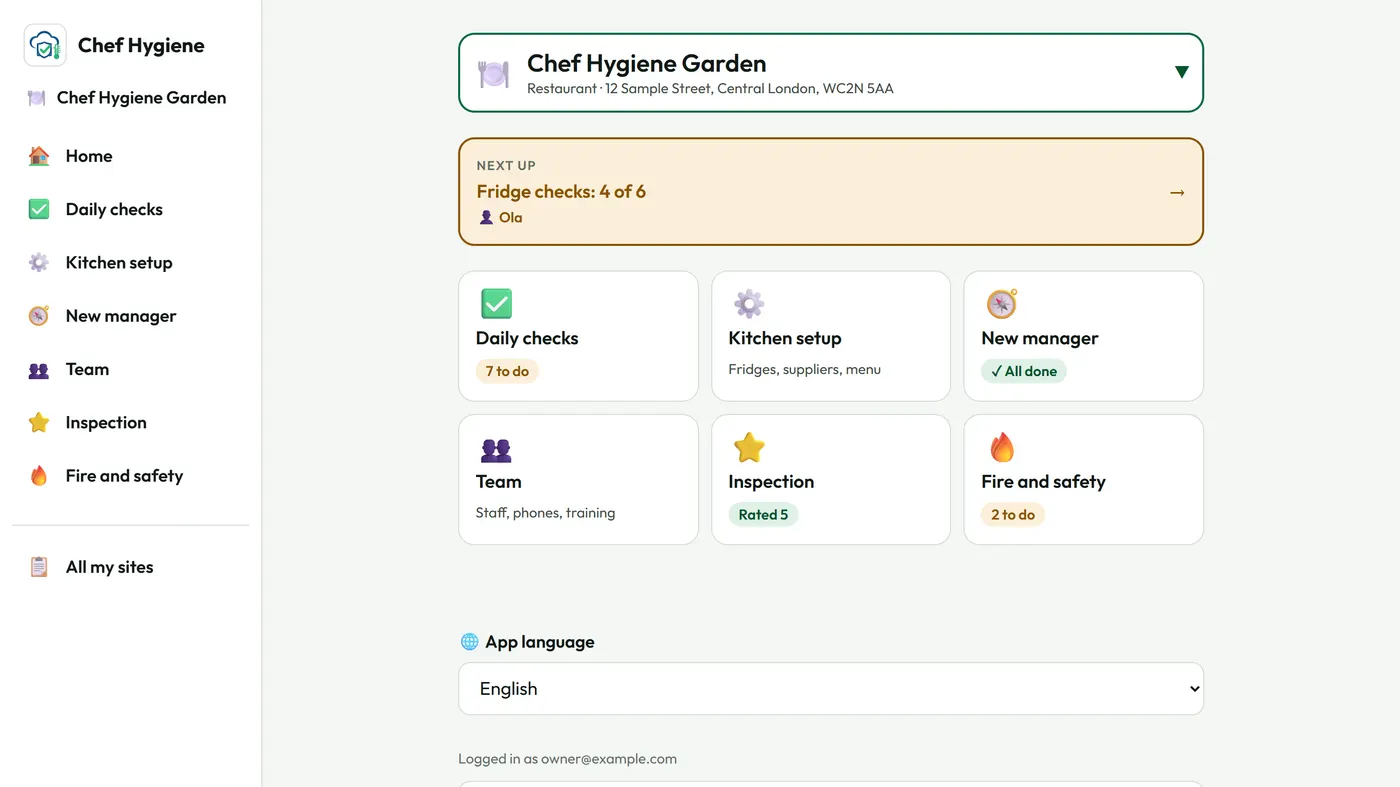
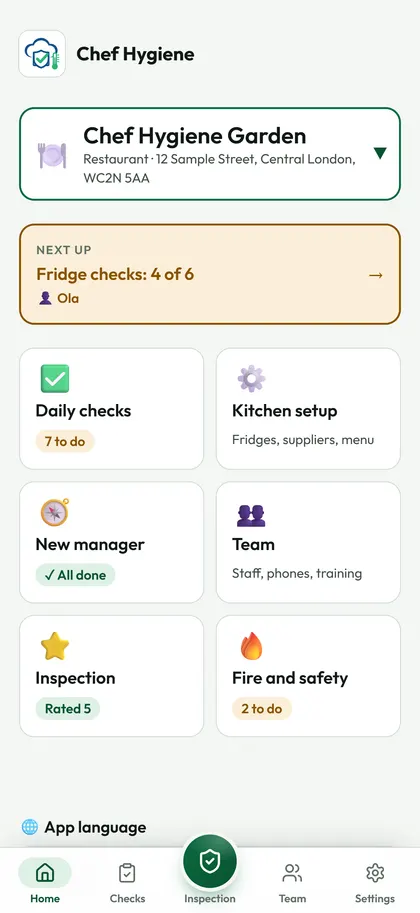
Słowenia: zasady higieny żywności
Zasady na tej stronie są na razie po angielsku. Zostaną przetłumaczone na Twój język.
- Organ inspekcyjny
- Administration for Food Safety, Veterinary Sector and Plant Protection (Uprava za varno hrano, veterinarstvo in varstvo rastlin, UVHVVR)
- Ocena publiczna
- NIE
- Języki w aplikacji
- Slovenščina, English, Italiano, Magyar
Twoja inspekcja
UVHVVR food inspectors check food law in all phases, from 10 regional offices. The control plan 2025 to 2029 sets how often, by risk. A restaurant, inn or snack bar with more than 10 staff is checked about every 18 months. With fewer than 10 staff, or a café or pastry shop with its own production, about every 30 months.
For small faults the inspector gives a warning with a deadline, then a decision. If the fault is not fixed in time, or at once if there is direct danger to life or health, the inspector can ban the activity and seal the premises. Under the ZVHK (Art. 109) a company can be fined EUR 2,000 to 20,000 and a sole trader EUR 1,000 to 10,000 for breaches such as no traceability or unmet hygiene conditions.
Ocena higieny
There is no national rating, sticker or duty to display a result. A ban for danger to life or health must be published online for at least 60 days.
„Prawo” to wiążąca reguła. „Oficjalne wytyczne” nie są prawem, ale inspektorzy ich oczekują. „Chef Hygiene domyślna” to wartość, którą aplikacja sprawdza, gdy żadna reguła nie podaje liczby.
Temperatury
- Oficjalne wytyczneNo Slovenian law sets restaurant fridge, hot-holding, cooling or reheating numbers. The values below come from the national catering guide (December 2010), as printed in NIJZ staff texts.
- Oficjalne wytyczneChilled storage and goods-in: below 5°C, or as the label says. Some NIJZ lines say below 4°C for raw food and cooked cold dishes.
- Oficjalne wytyczneFrozen food: −18°C or colder. For quick-frozen food this is law, with short rises of up to 3°C allowed (Rulebook 87/14, Art. 5).
- Oficjalne wytyczneCooking, core temperature for 15 seconds: 74°C for poultry pieces, game, stuffings and dishes with minced-meat stuffing; 68°C for pork and minced or chopped meat; 63°C for beef, veal, lamb, fish, eggs, dairy, rice and pasta.
- Oficjalne wytyczneHot holding: 63°C or hotter in the core. Below that, reheat or throw the food away. Serve within 2 hours of cooking, and never after 4 hours.
- Oficjalne wytyczneCooling in two stages: from 63°C to 20°C within 2 hours, then to 5°C within 4 more hours. A blast chiller is better.
- Oficjalne wytyczneReheating: 74°C for 15 seconds.
- Oficjalne wytyczneCold display and salad bars: under 3 hours. Very sensitive dishes such as tartare and cream cakes stay at 5 to 8°C. Throw the food away once it is over the limit or not served within 3 hours, and write down when it was put out.
Kadra, szkolenia i zdrowie
- PrawoSlovenia has no national food hygiene certificate, course length or renewal. EU law applies: the operator must instruct and train staff to suit their work (Regulation 852/2004).
- PrawoBefore the first day each worker signs a consent to report illness and fills in a symptom declaration. The employer keeps them with a staff list for inspectors (Rulebook 82/03).
- PrawoA worker with vomiting, diarrhoea, jaundice, pus-filled skin lesions or discharge from the eyes, ears or nose must stop food work and tell the manager at once (Rulebook 82/03).
- PrawoThere is no routine yearly medical exam or health card. A public health institute checks a worker only after an infection, diarrhoea or vomiting at home, travel to an area with poor hygiene, or when an inspector asks. The employer pays.
- Oficjalne wytyczneNIJZ outbreak guidance: stay away for 48 hours after symptoms stop for most infections. After typhoid or dysentery return only with a doctor’s certificate after negative stool tests.
Alergeny
- PrawoIn catering, allergen information must be in writing, in at least one of the places where dishes are offered: menu, board, poster or screen. It must be easy to see, readable and not covered. There is no oral-only option (Decree 6/2014, Art. 3).
- Oficjalne wytyczneUse the word “vsebuje” plus the allergen name, for the 14 EU allergens. This also applies to drinks (SPOT guidance).
- PrawoThe information must be in Slovene (ZVHK, Art. 51). A breach is fined EUR 6,000 to 30,000 for a company and EUR 3,000 to 6,000 for a sole trader (Decree 6/2014, Art. 4).
Kontrole bezpieczeństwa pożarowego
- PrawoEvery restaurant needs a fire order (požarni red) with annexes for records and check sheets. The owner sets how often the checks are done (Rulebook 52/07).
- PrawoWhere an evacuation plan is required, hold a practical evacuation drill at least once a year and record it (Rulebook 52/07, Art. 11).
- PrawoStaff get fire training at the start and again every 3 years for medium fire risk. Keep the records for at least 10 years (Rulebook 32/11).
- PrawoExtinguishers are serviced by an authorised maintainer following the maker’s instructions. The label shows the next date. The rule sets no fixed interval (Rulebook 108/04).
- PrawoBuilt-in fire systems, such as a fire alarm, gas detection and emergency lighting, need a certificate of proper functioning valid for 3 years (Rulebook 53/2019, Art. 21).
Dokumentacja
- PrawoPermanent HACCP-based procedures are required, in proportion to the size of the business (ZVHK Art. 36; Regulation 852/2004).
- Oficjalne wytyczneKeep traceability records of supplier, product and date in (ZVHK Art. 23). NIJZ advises keeping them usually 2 years, and 6 months after the use-by date for perishable or unpacked food.
- Oficjalne wytyczneLog fridge and freezer temperatures at least once a day at the start of work, with corrective actions (NIJZ guidance).
- PrawoRegister each premises with UVHVVR at least 15 days before opening and report changes within 15 days (ZVHK Art. 24).
Oficjalne źródła
- UVHVVR, Administration for Food Safety, Veterinary Sector and Plant Protection
- Law on Safe Food and Feed (ZVHK), PISRS
- Decree 6/2014 on allergen information (PISRS)
- NIJZ, basic hygiene positions for food staff
- SPOT, restaurants and inns
Checked
Ta strona zawiera ogólne informacje, a nie porady prawne. Sprawdź w lokalnym urzędzie.
Słowenia: Poradniki higieny żywności
Skonfiguruj Chef Hygiene
Utwórz konto, skonfiguruj wspólny tablet kuchenny i krok po kroku instaluj aplikację na telefonach swoich pracowników.
Słowenia: inspekcje żywności
Kto sprawdza Twoją kuchnię, jak przebiega kontrola i czy istnieje ocena higieny publicznej.
Słowenia: zasady dotyczące temperatury żywności
Temperatury żywności, które musi utrzymywać Twoja kuchnia, i zasady za nimi stojące.
Słowenia: alergeny
Co Twoja kuchnia musi mówić klientom o alergenach.
Słowenia: choroba personelu i szkolenie
Szkolenia, zasady postępowania z żywnością oraz sytuacje, w których chory personel musi trzymać się z daleka od żywności.
Słowenia: bezpieczeństwo przeciwpożarowe
Kontrole bezpieczeństwa przeciwpożarowego Twojej kuchni i częstotliwość ich przeprowadzania.
Słowenia: zapisy do przechowywania
Rejestry i rejestracje, które musi przechowywać Twoja kuchnia.
Słowenia: aplikacja Chef Hygiene.
Aplikacja ładuje te zasady do Twojej kuchni, sprawdza je pod kątem zgodności z zapisami i zachowuje dowód dla inspektora.
Inne kraje
 Wielka Brytania
 Irlandia
 Islandia
 Stany Zjednoczone
 Kanada
 Francja
 Hiszpania
 Holandia
 Belgia
 Portugalia
 Niemcy
 Austria
 Polska
 Rumunia
 Włochy
 Grecja
 Dania
Dania Szwajcaria
 Luksemburg
 Cypr
Cypr Malta
Malta Szwecja
 Norwegia
 Finlandia
 Czechy
 Węgry
Węgry Chorwacja
 Bułgaria
 Słowacja
 Estonia
 Łotwa
Łotwa Litwa
Litwa Liechtenstein
 San Marino
 Gibraltar
 Monako
 Mołdawia
 Andora
 Serbia
 Jersey
 Guernsey
 Wyspa Man
 Turcja
 Czarnogóra
 Bośnia i Hercegowina
 Kosowo
 Albania
 Macedonia Północna
 Ukraina