 Francia: per ristoranti e takeaway
Pronti per l’ispezione alimentare. Ogni giorno.
In France, Chef Hygiene follows the arrêté of 21 December 2009 on food temperatures, the 14-hour hygiene training of Décret 2011-731 and EU rules, and the DDPP inspects restaurants.
14 giorni gratuiti · un prezzo unico per sito · nessun contratto
Francia: norme di igiene alimentare
Le regole presenti in questa pagina sono al momento in inglese. Verranno tradotte nella tua lingua.
- organismo di ispezione
- Departmental Directorate for the Protection of Populations (Direction Départementale de la Protection des Populations, DDPP)
- Valutazione pubblica
- SÌ
- Lingue nell’app
- Français, English
La tua ispezione
The DDPP carries out official controls in restaurants. The DGAL (Direction Générale de l’Alimentation) sets national inspection policy. About 52,000 inspections a year are made in commercial restaurants.
Inspections follow risk: higher-risk places are inspected at least twice a year. A small fault brings a warning letter. A bigger fault brings an official report, a deadline for corrective measures and a re-inspection. If public health is at serious risk, the DDPP can order closure, withdraw the sanitary approval or suspend operations.
Valutazione igienica
Yes. Alim’confiance publishes every official inspection result online, free for the public. It has 4 levels: Très satisfaisant, Satisfaisant, À améliorer and À corriger de manière urgente. A result stays visible for 1 year.
“Legge” è una norma vincolante. “Linee guida ufficiali” non sono legge, ma gli ispettori se le aspettano. “Chef Hygiene predefinito” è un valore che l’app controlla quando nessuna norma fornisce un numero.
Temperature
- LeggeDishes prepared in advance (préparations culinaires élaborées à l’avance): +3°C or colder.
- LeggeRaw poultry and meat preparations: +4°C or colder.
- LeggeMinced meat and fresh fish products: +2°C or colder.
- LeggeIce cream and frozen minced meat and fish: −18°C or colder. Other frozen food: −12°C or colder. Chef Hygiene aims for −18°C and flags a freezer above −15°C.
- LeggeDishes served or delivered hot: +63°C or hotter.
- Linee guida ufficialiCooling: from +63°C to below +10°C in less than 2 hours. Annexe IV of the arrêté makes this law in collective catering. Commercial restaurants use the same numbers as good practice from the hygiene guides.
- Linee guida ufficialiReheating: no more than 1 hour between +10°C and the serving temperature of +63°C. This is law in collective catering and good practice from the hygiene guides in restaurants.
- Chef Hygiene predefinitoFrench law sets no core cooking temperature. Chef Hygiene checks against 75°C in the centre, or 70°C for 2 minutes.
Personale, formazione e salute
- LeggeCommercial restaurants, cafeterias, self-service and fast-food places need at least one person with 14 hours of food hygiene training. The rules are Décret 2011-731 and the arrêté of 5 October 2011.
- LeggeYou do not need the course with 3 years of experience managing or running a food business. A recognised food hygiene diploma issued after 1 January 2006 also counts. The rule sets no renewal date.
- LeggeA worker with a disease carried by food, an infected wound, a skin infection or diarrhoea must not handle food (EU Regulation 852/2004). They must tell the business operator at once.
- Linee guida ufficialiFrench law sets no fixed time off for sick staff. The operator judges each case and keeps the person away from food until they are medically cleared.
Allergeni
- LeggeThe 14 EU allergens must be declared: gluten cereals, crustaceans, eggs, fish, peanuts, soya, milk, tree nuts, celery, mustard, sesame, sulphites, lupin and molluscs (Regulation 1169/2011).
- LeggeFor food that is not prepacked, such as restaurant dishes, the information must be in writing (Décret 2015-447). It goes on, or right next to, the food, so there is no doubt which dish has which allergen.
- Linee guida ufficialiA label, a menu note or a board can carry it. Staff can also explain it by voice if it is backed by written documents. Staff must be trained to give it correctly.
Controlli di sicurezza antincendio
- LeggeFire extinguishers are checked at least once a year by a qualified person or approved body. Dates go on the label and in the safety register (registre de sécurité). Extinguishers are overhauled every 10 years.
- LeggeKitchen hood and ducts: cleaned at least once a year (Article GC 21 of the 1980 fire rules for public buildings). Grease filters are cleaned at least weekly, and every cleaning is written in the register.
- LeggeGas installations, connections and appliances are checked every year. Chimney flues are swept at least yearly. A competent body or person does the work and the register records it.
- LeggeElectrical installations are checked every year by an approved organisation or a competent person. The report goes in the safety register.
- LeggeEvery restaurant keeps a safety register. It holds the emergency numbers, evacuation instructions, staff training dates and reports of all technical checks and maintenance.
Registri
- LeggeEvery food business except primary production needs a food safety plan (Plan de Maîtrise Sanitaire, PMS) based on HACCP principles and good hygiene practice.
- Linee guida ufficialiThe plan covers cleaning and disinfection records, goods-in forms with temperatures, fridge and cooking temperature records, equipment maintenance, staff training, pest control and logs of problems and fixes.
- Linee guida ufficialiKeep verification and trend records for at least 3 years. Keep food safety control records for the product’s shelf life plus 6 months (DGAL instruction).
Fonti ufficiali
- Ministry of Agriculture: inspections of food businesses
- Alim’confiance: how it works and the four levels
- Décret 2011-731 (food hygiene training), Légifrance
- Décret 2015-447 (allergen information), Légifrance
- Service-Public Entreprendre: hygiene rules in restaurants
Checked
Questa pagina fornisce informazioni di carattere generale e non costituisce consulenza legale. Si prega di contattare le autorità locali competenti.
Francia: guide sull’igiene alimentare
Configura Chef Hygiene
Crea il tuo account, configura un tablet da cucina condiviso e metti l'app sui telefoni del tuo staff, passo dopo passo.
Francia: ispezioni alimentari
Chi ispeziona la tua cucina, come funziona un’ispezione e se esiste una valutazione di igiene pubblica.
Francia: regole sulla temperatura degli alimenti
Le temperature degli alimenti che la tua cucina deve mantenere e le regole che ne sono alla base.
Francia: allergeni
Cosa deve dire la tua cucina ai clienti sugli allergeni.
Francia: malattia e formazione del personale
Formazione, regole per gli operatori alimentari e quando il personale malato deve stare lontano dal cibo.
Francia: sicurezza antincendio
Controlli di sicurezza antincendio per la tua cucina e quanto spesso sono dovuti.
Francia: record da conservare
I registri e le registrazioni che la tua cucina deve conservare.
Francia: l'app Chef Hygiene.
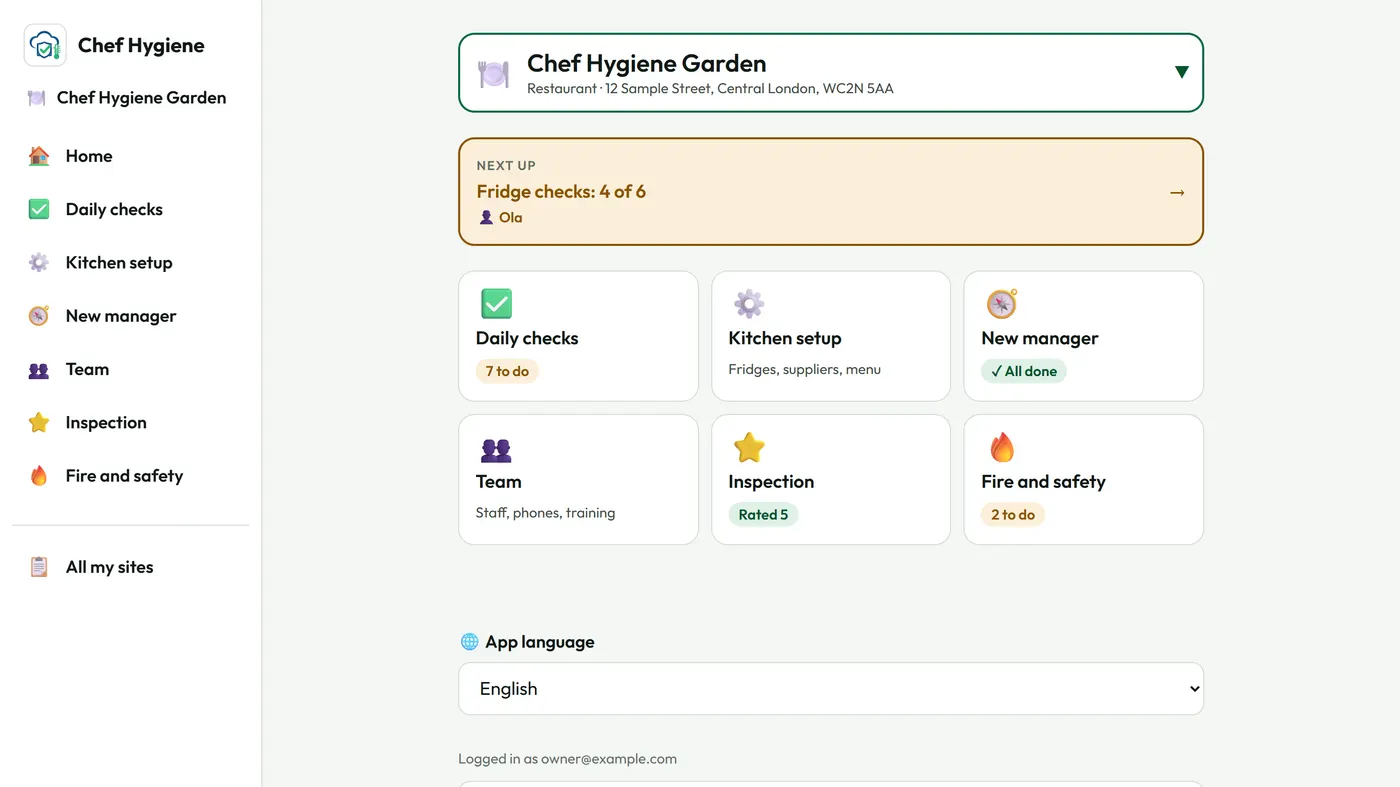
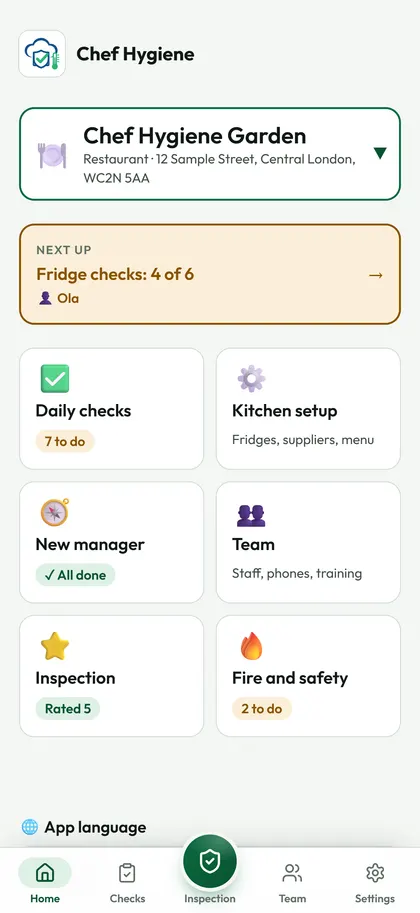
L’app carica queste regole per la tua cucina, verifica la conformità dei tuoi registri e conserva la documentazione per l’ispettore.
Altri paesi
 Regno Unito
 Irlanda
 Islanda
 Stati Uniti
 Canada
 Spagna
 Paesi Bassi
 Belgio
 Portogallo
 Germania
 Austria
 Polonia
 Romania
 Italia
 Grecia
 Danimarca
 Svizzera
 Lussemburgo
 Cipro
Cipro Malta
Malta Svezia
 Norvegia
 Finlandia
 Cechia
 Ungheria
 Croazia
 Bulgaria
 Slovacchia
 Slovenia
 Estonia
 Lettonia
 Lituania
 Liechtenstein
 San Marino
 Gibilterra
 Monaco
 Moldavia
 Andorra
 Serbia
 Jersey
 Guernsey
 Isola di Man
 Turchia
 Montenegro
 Bosnia ed Erzegovina
 Kosovo
 Albania
 Macedonia del Nord
 Ucraina