 Chorwacja: dla restauracji i dań na wynos
Gotowi na kontrolę żywności. Codziennie.
In Croatia the app follows the EU hygiene rules, the HACCP rulebook NN 124/2025 and the national catering guide of the Chamber of Trades and Crafts (HOK); the State Inspectorate inspects.
14 dni za darmo · jedna cena za witrynę · bez umowy
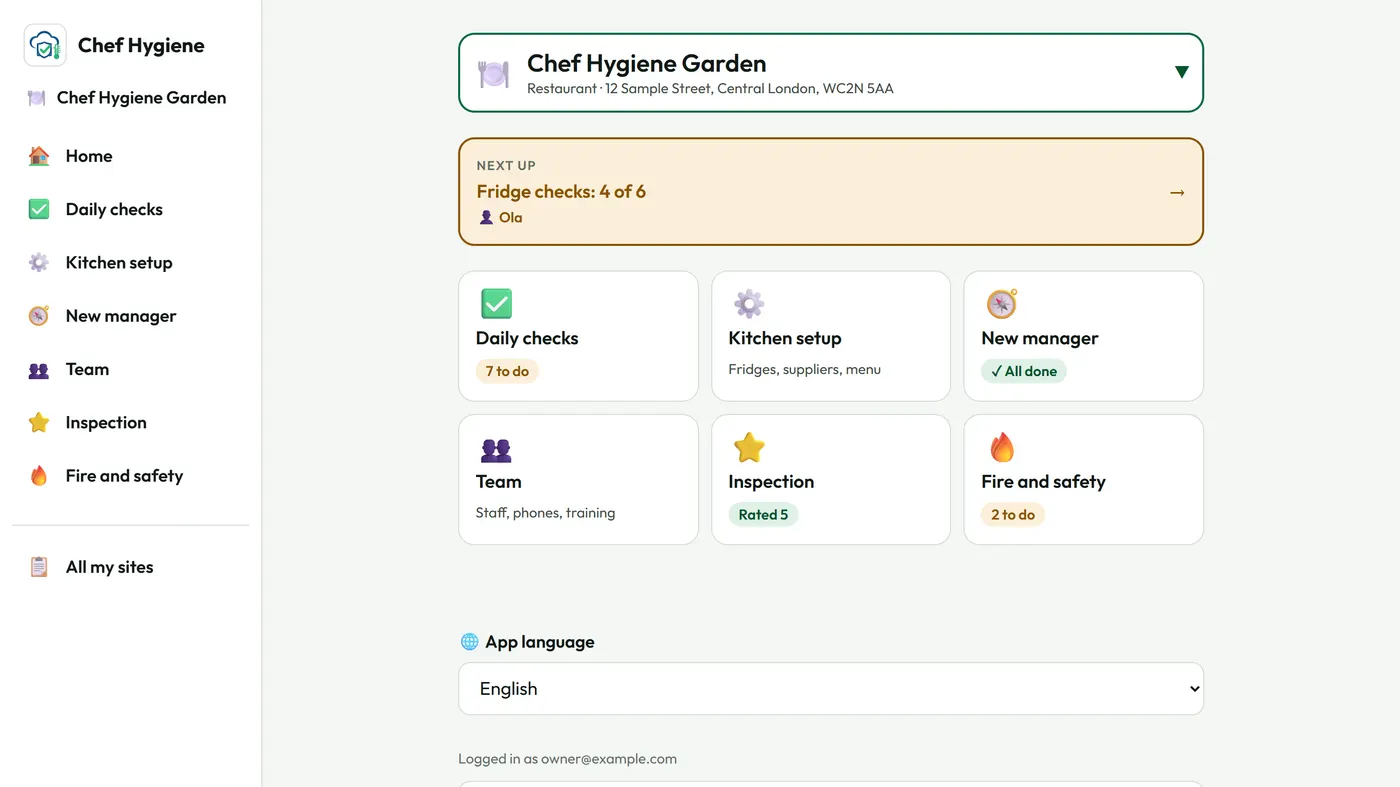
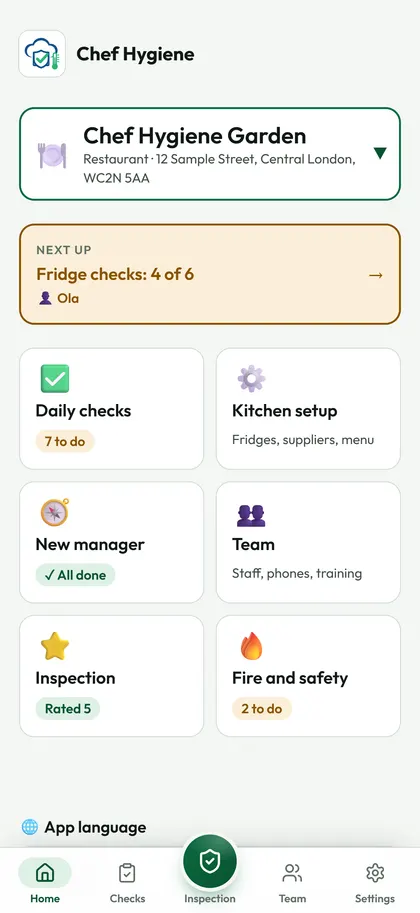
Chorwacja: zasady higieny żywności
Zasady na tej stronie są na razie po angielsku. Zostaną przetłumaczone na Twój język.
- Organ inspekcyjny
- State Inspectorate, sanitary inspection (Državni inspektorat, sanitarna inspekcija)
- Ocena publiczna
- NIE
- Języki w aplikacji
- Hrvatski, English
Twoja inspekcja
The State Inspectorate (Državni inspektorat, DIRH) inspects through its sanitary inspection (sanitarna inspekcija). It checks food hygiene, HACCP and staff health. It works from five regional offices (Zagreb, Osijek, Rijeka, Split, Varaždin). Tourism, market and labour inspectors also visit.
The inspector can ban rooms, equipment, products or a person’s work, and can seal the premises: 1 to 15 days the first time, 30 days if the same fault returns within 3 years. Fines for a company start at EUR 6,630 to 13,270 for having no HACCP system (Act NN 83/22). Appeals do not stop an order.
Ocena higieny
There is no national rating, sticker or smiley, and no duty to display an inspection result. The State Inspectorate publishes only totals.
„Prawo” to wiążąca reguła. „Oficjalne wytyczne” nie są prawem, ale inspektorzy ich oczekują. „Chef Hygiene domyślna” to wartość, którą aplikacja sprawdza, gdy żadna reguła nie podaje liczby.
Temperatury
- Oficjalne wytyczneNo Croatian law sets restaurant fridge, hot-holding, cooling or reheating numbers. The values below come from the national catering guide (HOK, 2nd edition 2025).
- Oficjalne wytyczneFridge: cooked dishes and poultry 4°C, minced meat 2°C, offal 3°C, other meat 7°C, vegetables 8°C. Fresh fish is kept at melting-ice temperature. Any fridge must stay at +8°C or colder.
- Oficjalne wytyczneFreezer: −18°C or colder.
- Oficjalne wytyczneCooking: 73°C for 30 seconds in the thickest part of the food.
- Oficjalne wytyczneHot holding: 65°C or hotter, checked every 2 hours. If it fell below 65°C for under 2 hours, reheat once to 73°C and use it. After 2 to 4 hours, use it at once. After more than 4 hours, throw it away.
- Oficjalne wytyczneCooling: at most 30 minutes at room temperature, then down to 4°C within 6 hours in all. Use the food within 24 hours.
- Oficjalne wytyczneReheating: 73°C for 30 seconds, and only once.
- Oficjalne wytyczneCold display: 8°C at most, aim for 4°C. After 2 hours over the limit, use the food within the next 2 hours. After 4 hours, throw it away.
- Oficjalne wytyczneAt goods-in, chilled food should be 8°C at most and frozen food −18°C or colder. Catering vans carry food at 4°C at most.
Kadra, szkolenia i zdrowie
- PrawoEveryone who touches, prepares or serves food needs the food hygiene course certificate before starting work, renewed every 5 years. The course is 15 teaching hours at a county public health institute. The employer pays (Act on protection from infectious diseases, Art. 37 and 39).
- PrawoStaff in direct contact with unpacked food need a medical exam before starting and then every year, including stool tests. The result goes in the sanitary card (sanitarna iskaznica), which the employer keeps (same Act and Rulebook NN 116/2018).
- PrawoPeople with an infectious disease that food can carry, or infected skin disease, must not work with food. After typhoid, dysentery or salmonellosis they need negative tests first.
- PrawoThe business must train the HACCP team and every worker whose job affects food safety, check that the training worked and keep records (Rulebook NN 124/2025, Art. 6).
Alergeny
- PrawoYou must give the 14 EU allergens for food that is not prepacked, in writing, easy to see, next to the food (Rulebook on unpackaged food, Art. 8). The information is free and available before the sale.
- PrawoOral information is allowed if a visible notice says where the information is or invites guests to ask staff, and the full information is also in print or electronic form on the premises for guests and inspectors.
- PrawoFor delivery orders, give the information before the sale and at delivery. It must be in Croatian, Latin script; other languages may be added. Keep a list of the allergens in every dish.
Kontrole bezpieczeństwa pożarowego
- PrawoThe owner checks each extinguisher at least every 3 months and records it. An authorised firm services it at least every year and after any use (Rulebook NN 101/11). Each floor needs at least 2 extinguishers (Rulebook NN 100/99).
- PrawoVentilation ducts from food-preparation rooms are cleaned every 3 months while the premises are open. Other ventilation ducts are cleaned at least yearly, with a written record (Rulebook NN 100/99, Art. 27).
- PrawoEmergency lighting is checked twice a year, once just before the main season, and recorded (Rulebook NN 100/99, Art. 23). Small ground-floor food premises are excepted.
- PrawoThe electrical installation is inspected and measured at least every 4 years. Keep the written report (technical regulation NN 5/2010).
Dokumentacja
- PrawoRestaurants keep these on the premises: goods-in rules, a cleaning plan, swab results, the cold-chain record at least once a day, shelf-life instructions for prepared dishes, and the pest plan and certificates (Rulebook NN 124/2025, Art. 14).
- PrawoSurface swab tests by a laboratory are needed at least every 6 months, with at least 10 samples for a restaurant (Rulebook NN 137/2009).
- PrawoKeep corrective-action records for 1 year after the shelf-life date, or 6 months for perishable food with no date (Rulebook NN 124/2025, Art. 22).
Oficjalne źródła
- State Inspectorate (Državni inspektorat)
- Croatian Chamber of Trades and Crafts (HOK), catering HACCP guide
- HACCP rulebook NN 124/2025
- Food hygiene Act NN 83/22
Checked
Ta strona zawiera ogólne informacje, a nie porady prawne. Sprawdź w lokalnym urzędzie.
Chorwacja: Poradniki higieny żywności
Skonfiguruj Chef Hygiene
Utwórz konto, skonfiguruj wspólny tablet kuchenny i krok po kroku instaluj aplikację na telefonach swoich pracowników.
Chorwacja: inspekcje żywności
Kto sprawdza Twoją kuchnię, jak przebiega kontrola i czy istnieje ocena higieny publicznej.
Chorwacja: zasady dotyczące temperatury żywności
Temperatury żywności, które musi utrzymywać Twoja kuchnia, i zasady za nimi stojące.
Chorwacja: alergeny
Co Twoja kuchnia musi mówić klientom o alergenach.
Chorwacja: choroba personelu i szkolenie
Szkolenia, zasady postępowania z żywnością oraz sytuacje, w których chory personel musi trzymać się z daleka od żywności.
Chorwacja: bezpieczeństwo przeciwpożarowe
Kontrole bezpieczeństwa przeciwpożarowego Twojej kuchni i częstotliwość ich przeprowadzania.
Chorwacja: zapisy do przechowywania
Rejestry i rejestracje, które musi przechowywać Twoja kuchnia.
Chorwacja: aplikacja Chef Hygiene.
Aplikacja ładuje te zasady do Twojej kuchni, sprawdza je pod kątem zgodności z zapisami i zachowuje dowód dla inspektora.
Inne kraje
 Wielka Brytania
 Irlandia
 Islandia
 Stany Zjednoczone
 Kanada
 Francja
 Hiszpania
 Holandia
 Belgia
 Portugalia
 Niemcy
 Austria
 Polska
 Rumunia
 Włochy
 Grecja
 Dania
Dania Szwajcaria
 Luksemburg
 Cypr
Cypr Malta
Malta Szwecja
 Norwegia
 Finlandia
 Czechy
 Węgry
Węgry Bułgaria
 Słowacja
 Słowenia
 Estonia
 Łotwa
Łotwa Litwa
Litwa Liechtenstein
 San Marino
 Gibraltar
 Monako
 Mołdawia
 Andora
 Serbia
 Jersey
 Guernsey
 Wyspa Man
 Turcja
 Czarnogóra
 Bośnia i Hercegowina
 Kosowo
 Albania
 Macedonia Północna
 Ukraina