 Holandia: dla restauracji i dań na wynos
Gotowi na kontrolę żywności. Codziennie.
In the European Netherlands, Chef Hygiene follows the Warenwetbesluit Bereiding en behandeling van levensmiddelen, EU Regulation 852/2004 and the KHN Hygiënecode voor de Horeca; the NVWA inspects.
14 dni za darmo · jedna cena za witrynę · bez umowy
Holandia: zasady higieny żywności
Zasady na tej stronie są na razie po angielsku. Zostaną przetłumaczone na Twój język.
- Organ inspekcyjny
- Netherlands Food and Consumer Product Safety Authority (Nederlandse Voedsel- en Warenautoriteit, NVWA)
- Ocena publiczna
- Tak
- Języki w aplikacji
- Nederlands, English
Twoja inspekcja
The NVWA inspects restaurants and takeaways for food safety. The municipality (gemeente) handles permits, the alcohol licence and local fire safety enforcement.
Visits are unannounced and based on risk. You must let the inspector in. A medium breach brings an official warning, and in hospitality a second one is followed by an administrative fine. A serious breach brings a fine at once and a re-inspection. Three or more serious breaches in 2 years mean verscherpt toezicht (stricter supervision), and the NVWA can then close the business.
Ocena higieny
Yes, but there is no sticker. The NVWA publishes every result online under the Gezondheidswet, art. 44: Voldoet, Verbeterpunten vastgesteld, Verscherpt toezicht or Geen recente gegevens. A result stays online for at most 2 years.
„Prawo” to wiążąca reguła. „Oficjalne wytyczne” nie są prawem, ale inspektorzy ich oczekują. „Chef Hygiene domyślna” to wartość, którą aplikacja sprawdza, gdy żadna reguła nie podaje liczby.
Temperatury
- PrawoChilled food: 7°C or colder, measured in the food, in storage and in transport (Warenwetbesluit, art. 15(1)). A colder temperature on the label wins.
- Oficjalne wytyczneChef Hygiene aims for a fridge setting of 4°C, as KHN and the Voedingscentrum advise. This is advice, not a legal limit.
- Oficjalne wytyczneFrozen food: −18°C or colder (NVWA and the hygiene code).
- PrawoHot food kept for direct sale: 60°C or hotter (art. 15(2)).
- Oficjalne wytyczneCooking: 75°C or hotter in the centre (NVWA and the hygiene code).
- Oficjalne wytyczneCooling: the law says only “as fast as possible” (Regulation 852/2004). The hygiene code starts at 75°C or hotter. It gives 20°C or colder after 2 hours as a guide value, and 7°C or colder within 5 hours as the norm.
- Oficjalne wytyczneReheating: 60°C or hotter in the centre (NVWA), within 60 minutes (hygiene code).
- PrawoIn restaurants, chilled food may stand out of the fridge once, for at most 2 hours, and is then thrown away. You need a written procedure and a log, kept for 1 year.
- Oficjalne wytyczneThaw food in the fridge or under cold running water (NVWA).
Kadra, szkolenia i zdrowie
- PrawoDutch law sets no food hygiene certificate, number of hours or renewal. Staff must be supervised and instructed to suit their work (Regulation 852/2004, Annex II, Chapter XII).
- Oficjalne wytyczneStaff must know the hygiene code, and the owner may instruct them. The NVWA checks staff knowledge during inspections.
- PrawoA person with a disease carried by food, infected wounds, skin infections, sores or diarrhoea must not handle food. They must report it at once (Regulation 852/2004, Annex II, Chapter VIII).
- Oficjalne wytyczneFor norovirus, RIVM advises staff to return to their own work no earlier than 24 hours after vomiting or diarrhoea stops.
- PrawoWith one or more employees you must appoint a BHV’er for first aid, fire fighting and evacuation (Arbowet, art. 15).
- PrawoManagers on an alcohol licence must be 21 or older and hold the Verklaring Sociale Hygiëne (Alcoholwet, art. 8).
Alergeny
- PrawoThe 14 EU allergens must be declared: gluten cereals, crustaceans, eggs, fish, peanuts, soya, milk, tree nuts, celery, mustard, sesame, sulphites, lupin and molluscs (Regulation 1169/2011).
- PrawoWritten method: a clearly visible notice where the food is sold says where the allergen information is. The information is available in writing or electronically (Warenwetregeling allergeneninformatie, art. 2).
- PrawoVerbal method (art. 3): staff can always give correct information before the sale. The written version is available to staff and the NVWA. A visible notice asks guests to ask staff.
Kontrole bezpieczeństwa pożarowego
- PrawoRequired fire extinguishers and hose reels: maintenance with a function check at least every 2 years (Besluit bouwwerken leefomgeving, Bbl, art. 6.35). Insurers often ask for a yearly service.
- PrawoTell the municipality at least 4 weeks before opening if more than 50 people will be inside (Bbl, art. 6.6 to 6.7).
- Oficjalne wytyczneHood and duct cleaning has no legal interval. KHN advises at least once a year, and every 6 months with heavy grill, fryer or wok use. The municipality can ban cooking if a duct is dirty.
- Oficjalne wytyczneGas appliances have no legal inspection interval for kitchens. The Arboportaal advises a check once a year as a safe minimum.
- Oficjalne wytyczneThe electrical installation has no legal interval (Arbobesluit, art. 3.4). Insurers usually ask for a NEN 3140 inspection every 3 to 5 years.
Dokumentacja
- PrawoYou need your own HACCP plan (Regulation 852/2004, art. 5) or an approved hygiene code. If you use the Hygiënecode voor de Horeca, you must follow it (Warenwetbesluit hygiëne van levensmiddelen, art. 5(2)).
- Oficjalne wytyczneThe code’s model forms ask for fridge and freezer displays daily and a probe check weekly, deliveries weekly per supplier, and cooking, cooling, hot holding and reheating weekly.
- Oficjalne wytyczneKHN advises keeping the code’s records for at least 6 months.
- PrawoLogs of chilled food kept out of the fridge must be kept for at least 1 year (Warenwetregeling Vrijstelling gekoeld bewaren, art. 1).
Oficjalne źródła
- NVWA: food safety in hospitality
- NVWA public inspection results
- Warenwetbesluit hygiëne van levensmiddelen
- KHN Hygiënecode voor de Horeca
- Warenwetregeling allergeneninformatie niet-voorverpakte levensmiddelen
Checked
Ta strona zawiera ogólne informacje, a nie porady prawne. Sprawdź w lokalnym urzędzie.
Holandia: Poradniki higieny żywności
Skonfiguruj Chef Hygiene
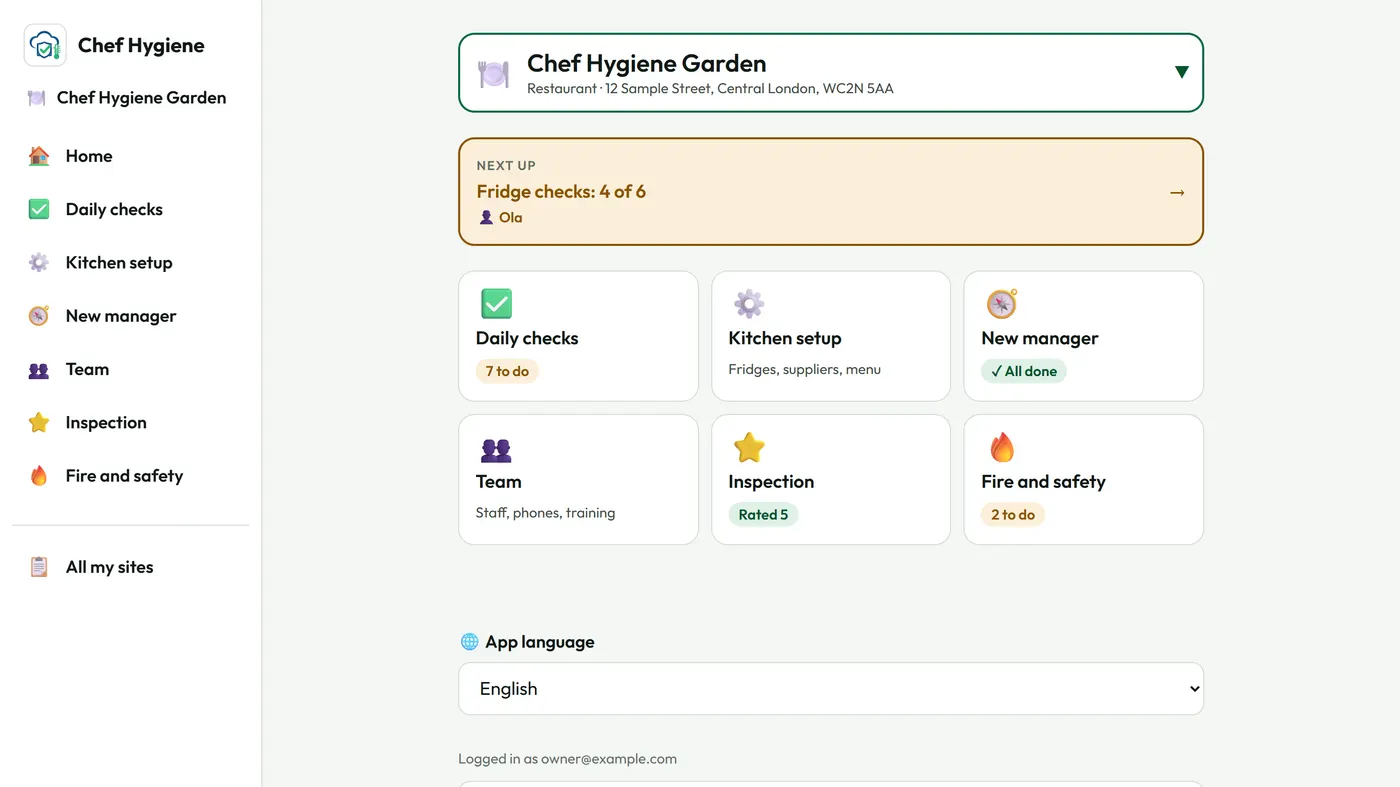
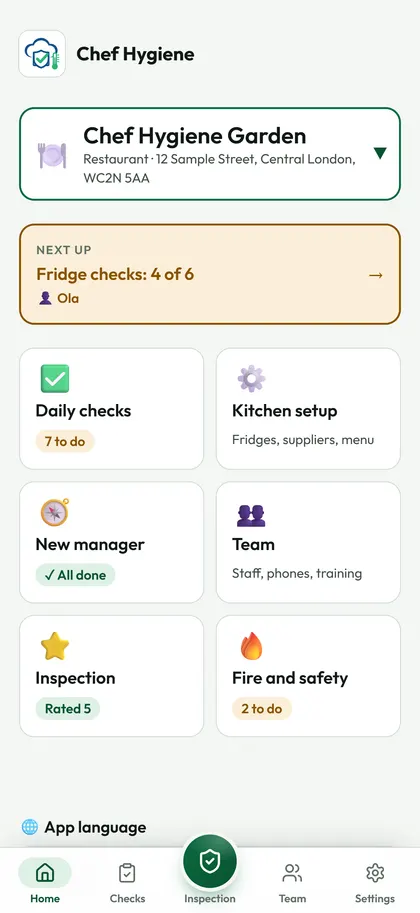
Utwórz konto, skonfiguruj wspólny tablet kuchenny i krok po kroku instaluj aplikację na telefonach swoich pracowników.
Holandia: inspekcje żywności
Kto sprawdza Twoją kuchnię, jak przebiega kontrola i czy istnieje ocena higieny publicznej.
Holandia: zasady dotyczące temperatury żywności
Temperatury żywności, które musi utrzymywać Twoja kuchnia, i zasady za nimi stojące.
Holandia: alergeny
Co Twoja kuchnia musi mówić klientom o alergenach.
Holandia: choroba personelu i szkolenie
Szkolenia, zasady postępowania z żywnością oraz sytuacje, w których chory personel musi trzymać się z daleka od żywności.
Holandia: bezpieczeństwo przeciwpożarowe
Kontrole bezpieczeństwa przeciwpożarowego Twojej kuchni i częstotliwość ich przeprowadzania.
Holandia: zapisy do przechowywania
Rejestry i rejestracje, które musi przechowywać Twoja kuchnia.
Holandia: aplikacja Chef Hygiene.
Aplikacja ładuje te zasady do Twojej kuchni, sprawdza je pod kątem zgodności z zapisami i zachowuje dowód dla inspektora.
Inne kraje
 Wielka Brytania
 Irlandia
 Islandia
 Stany Zjednoczone
 Kanada
 Francja
 Hiszpania
 Belgia
 Portugalia
 Niemcy
 Austria
 Polska
 Rumunia
 Włochy
 Grecja
 Dania
Dania Szwajcaria
 Luksemburg
 Cypr
Cypr Malta
Malta Szwecja
 Norwegia
 Finlandia
 Czechy
 Węgry
Węgry Chorwacja
 Bułgaria
 Słowacja
 Słowenia
 Estonia
 Łotwa
Łotwa Litwa
Litwa Liechtenstein
 San Marino
 Gibraltar
 Monako
 Mołdawia
 Andora
 Serbia
 Jersey
 Guernsey
 Wyspa Man
 Turcja
 Czarnogóra
 Bośnia i Hercegowina
 Kosowo
 Albania
 Macedonia Północna
 Ukraina