 Países Baixos: para restaurantes e delivery
Pronto para a inspeção sanitária. Todos os dias.
In the European Netherlands, Chef Hygiene follows the Warenwetbesluit Bereiding en behandeling van levensmiddelen, EU Regulation 852/2004 and the KHN Hygiënecode voor de Horeca; the NVWA inspects.
14 dias grátis · preço único por site · sem contrato
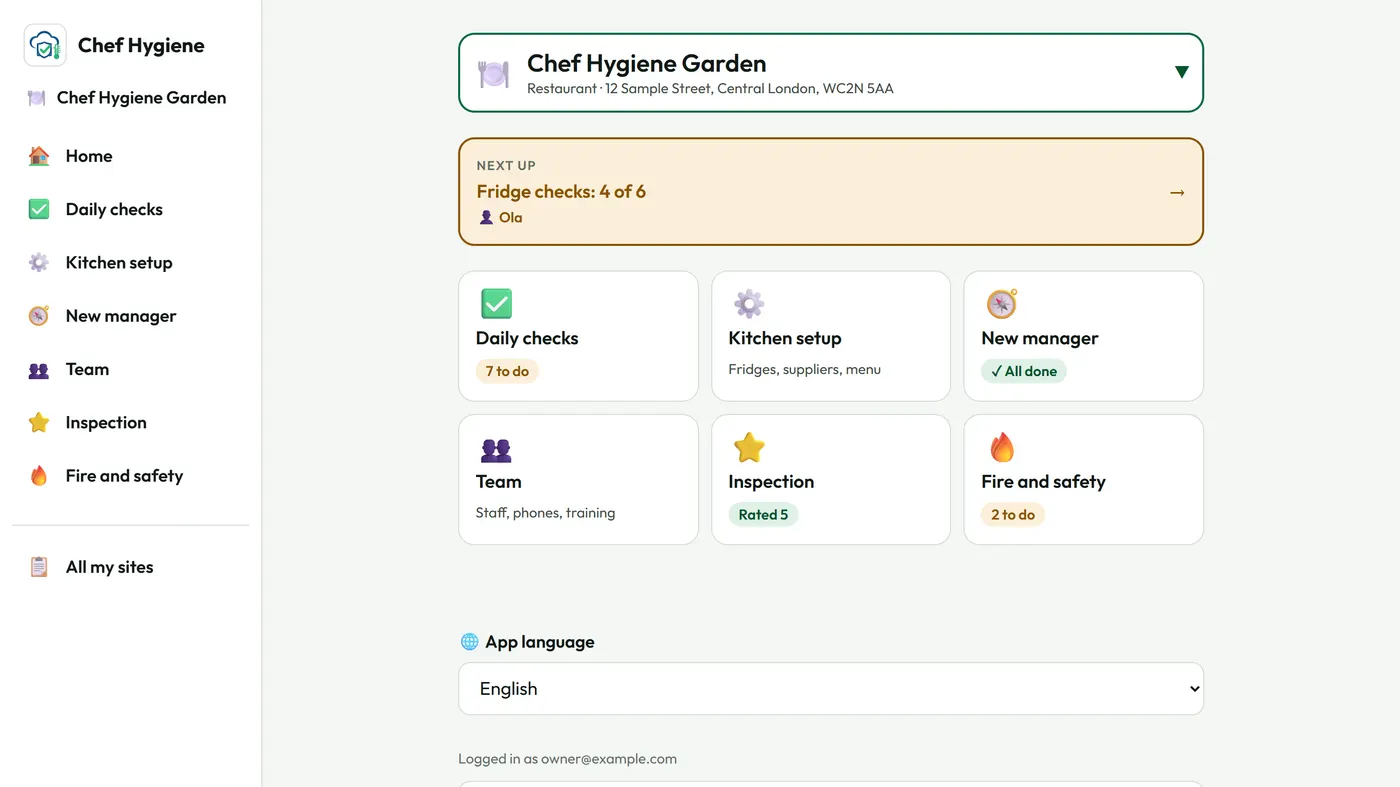
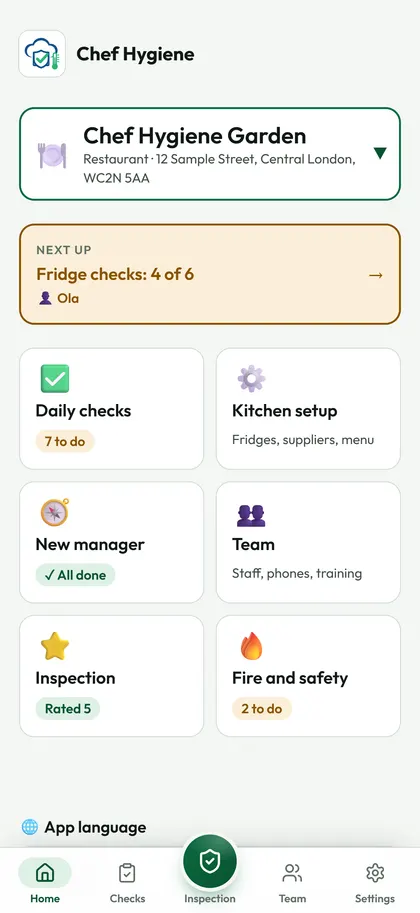
Países Baixos: regras de higiene alimentar
As regras desta página estão em inglês por enquanto. Elas serão traduzidas para o seu idioma.
- Órgão de inspeção
- Netherlands Food and Consumer Product Safety Authority (Nederlandse Voedsel- en Warenautoriteit, NVWA)
- Classificação pública
- Sim
- Idiomas disponíveis no aplicativo
- Nederlands, English
Sua inspeção
The NVWA inspects restaurants and takeaways for food safety. The municipality (gemeente) handles permits, the alcohol licence and local fire safety enforcement.
Visits are unannounced and based on risk. You must let the inspector in. A medium breach brings an official warning, and in hospitality a second one is followed by an administrative fine. A serious breach brings a fine at once and a re-inspection. Three or more serious breaches in 2 years mean verscherpt toezicht (stricter supervision), and the NVWA can then close the business.
Classificação de higiene
Yes, but there is no sticker. The NVWA publishes every result online under the Gezondheidswet, art. 44: Voldoet, Verbeterpunten vastgesteld, Verscherpt toezicht or Geen recente gegevens. A result stays online for at most 2 years.
“Lei” é uma regra vinculativa. “Orientação oficial” não é lei, mas os inspetores esperam que seja. “Chef Hygiene padrão” é um valor que o aplicativo verifica quando nenhuma regra fornece um número.
Temperaturas
- LeiChilled food: 7°C or colder, measured in the food, in storage and in transport (Warenwetbesluit, art. 15(1)). A colder temperature on the label wins.
- Orientações oficiaisChef Hygiene aims for a fridge setting of 4°C, as KHN and the Voedingscentrum advise. This is advice, not a legal limit.
- Orientações oficiaisFrozen food: −18°C or colder (NVWA and the hygiene code).
- LeiHot food kept for direct sale: 60°C or hotter (art. 15(2)).
- Orientações oficiaisCooking: 75°C or hotter in the centre (NVWA and the hygiene code).
- Orientações oficiaisCooling: the law says only “as fast as possible” (Regulation 852/2004). The hygiene code starts at 75°C or hotter. It gives 20°C or colder after 2 hours as a guide value, and 7°C or colder within 5 hours as the norm.
- Orientações oficiaisReheating: 60°C or hotter in the centre (NVWA), within 60 minutes (hygiene code).
- LeiIn restaurants, chilled food may stand out of the fridge once, for at most 2 hours, and is then thrown away. You need a written procedure and a log, kept for 1 year.
- Orientações oficiaisThaw food in the fridge or under cold running water (NVWA).
Equipe, treinamento e saúde
- LeiDutch law sets no food hygiene certificate, number of hours or renewal. Staff must be supervised and instructed to suit their work (Regulation 852/2004, Annex II, Chapter XII).
- Orientações oficiaisStaff must know the hygiene code, and the owner may instruct them. The NVWA checks staff knowledge during inspections.
- LeiA person with a disease carried by food, infected wounds, skin infections, sores or diarrhoea must not handle food. They must report it at once (Regulation 852/2004, Annex II, Chapter VIII).
- Orientações oficiaisFor norovirus, RIVM advises staff to return to their own work no earlier than 24 hours after vomiting or diarrhoea stops.
- LeiWith one or more employees you must appoint a BHV’er for first aid, fire fighting and evacuation (Arbowet, art. 15).
- LeiManagers on an alcohol licence must be 21 or older and hold the Verklaring Sociale Hygiëne (Alcoholwet, art. 8).
Alérgenos
- LeiThe 14 EU allergens must be declared: gluten cereals, crustaceans, eggs, fish, peanuts, soya, milk, tree nuts, celery, mustard, sesame, sulphites, lupin and molluscs (Regulation 1169/2011).
- LeiWritten method: a clearly visible notice where the food is sold says where the allergen information is. The information is available in writing or electronically (Warenwetregeling allergeneninformatie, art. 2).
- LeiVerbal method (art. 3): staff can always give correct information before the sale. The written version is available to staff and the NVWA. A visible notice asks guests to ask staff.
Verificações de segurança contra incêndio
- LeiRequired fire extinguishers and hose reels: maintenance with a function check at least every 2 years (Besluit bouwwerken leefomgeving, Bbl, art. 6.35). Insurers often ask for a yearly service.
- LeiTell the municipality at least 4 weeks before opening if more than 50 people will be inside (Bbl, art. 6.6 to 6.7).
- Orientações oficiaisHood and duct cleaning has no legal interval. KHN advises at least once a year, and every 6 months with heavy grill, fryer or wok use. The municipality can ban cooking if a duct is dirty.
- Orientações oficiaisGas appliances have no legal inspection interval for kitchens. The Arboportaal advises a check once a year as a safe minimum.
- Orientações oficiaisThe electrical installation has no legal interval (Arbobesluit, art. 3.4). Insurers usually ask for a NEN 3140 inspection every 3 to 5 years.
Registros
- LeiYou need your own HACCP plan (Regulation 852/2004, art. 5) or an approved hygiene code. If you use the Hygiënecode voor de Horeca, you must follow it (Warenwetbesluit hygiëne van levensmiddelen, art. 5(2)).
- Orientações oficiaisThe code’s model forms ask for fridge and freezer displays daily and a probe check weekly, deliveries weekly per supplier, and cooking, cooling, hot holding and reheating weekly.
- Orientações oficiaisKHN advises keeping the code’s records for at least 6 months.
- LeiLogs of chilled food kept out of the fridge must be kept for at least 1 year (Warenwetregeling Vrijstelling gekoeld bewaren, art. 1).
Fontes oficiais
- NVWA: food safety in hospitality
- NVWA public inspection results
- Warenwetbesluit hygiëne van levensmiddelen
- KHN Hygiënecode voor de Horeca
- Warenwetregeling allergeneninformatie niet-voorverpakte levensmiddelen
Checked
Esta página contém informações gerais e não constitui aconselhamento jurídico. Consulte a sua autoridade local.
Países Baixos: guias de higiene alimentar
Configurar Chef Hygiene
Crie sua conta, configure um tablet de cozinha compartilhada e coloque o aplicativo nos telefones de sua equipe, passo a passo.
Países Baixos: inspeções de alimentos
Quem fiscaliza sua cozinha, como funciona a fiscalização e se existe classificação de higiene pública.
Países Baixos: regras de temperatura dos alimentos
As temperaturas dos alimentos que sua cozinha deve manter e as regras por trás delas.
Países Baixos: alérgenos
O que sua cozinha deve informar aos clientes sobre alérgenos.
Países Baixos: doença e treinamento do pessoal
Treinamento, regras para manipuladores de alimentos e quando a equipe doente deve ficar longe dos alimentos.
Países Baixos: segurança contra incêndio
Verificações de segurança contra incêndio em sua cozinha e com que frequência.
Países Baixos: registros a serem mantidos
Os registros e registros que sua cozinha deve manter.
Países Baixos: o aplicativo Chef Hygiene
O aplicativo carrega essas regras para sua cozinha, compara seus registros com elas e guarda comprovantes para o inspetor.
Outros países
 Reino Unido
 Irlanda
 Islândia
 Estados Unidos
 Canadá
 França
 Espanha
 Bélgica
 Portugal
 Alemanha
 Áustria
 Polônia
 Romênia
 Itália
 Grécia
 Dinamarca
 Suíça
Suíça Luxemburgo
 Chipre
 Malta
Malta Suécia
 Noruega
 Finlândia
 Tchéquia
 Hungria
 Croácia
 Bulgária
 Eslováquia
 Eslovênia
 Estônia
 Letônia
 Lituânia
 Liechtenstein
 San Marino
 Gibraltar
 Mônaco
 Moldávia
 Andorra
 Sérvia
 Jersey
 Guernsey
 Ilha de Man
 Turquia
 Montenegro
 Bósnia e Herzegovina
 Kosovo
 Albânia
 Macedônia do Norte
 Ucrânia