 Lengyelország: éttermekben és elvitelre
Készen áll az élelmiszer-ellenőrzésre. Minden nap.
In Poland the app follows the food safety act, EU Regulation 852/2004 and the guidance of the Chief Sanitary Inspectorate (GIS); the district sanitary inspector (Sanepid) inspects.
14 nap ingyenes · egy ár webhelyenként · szerződéskötés nélkül
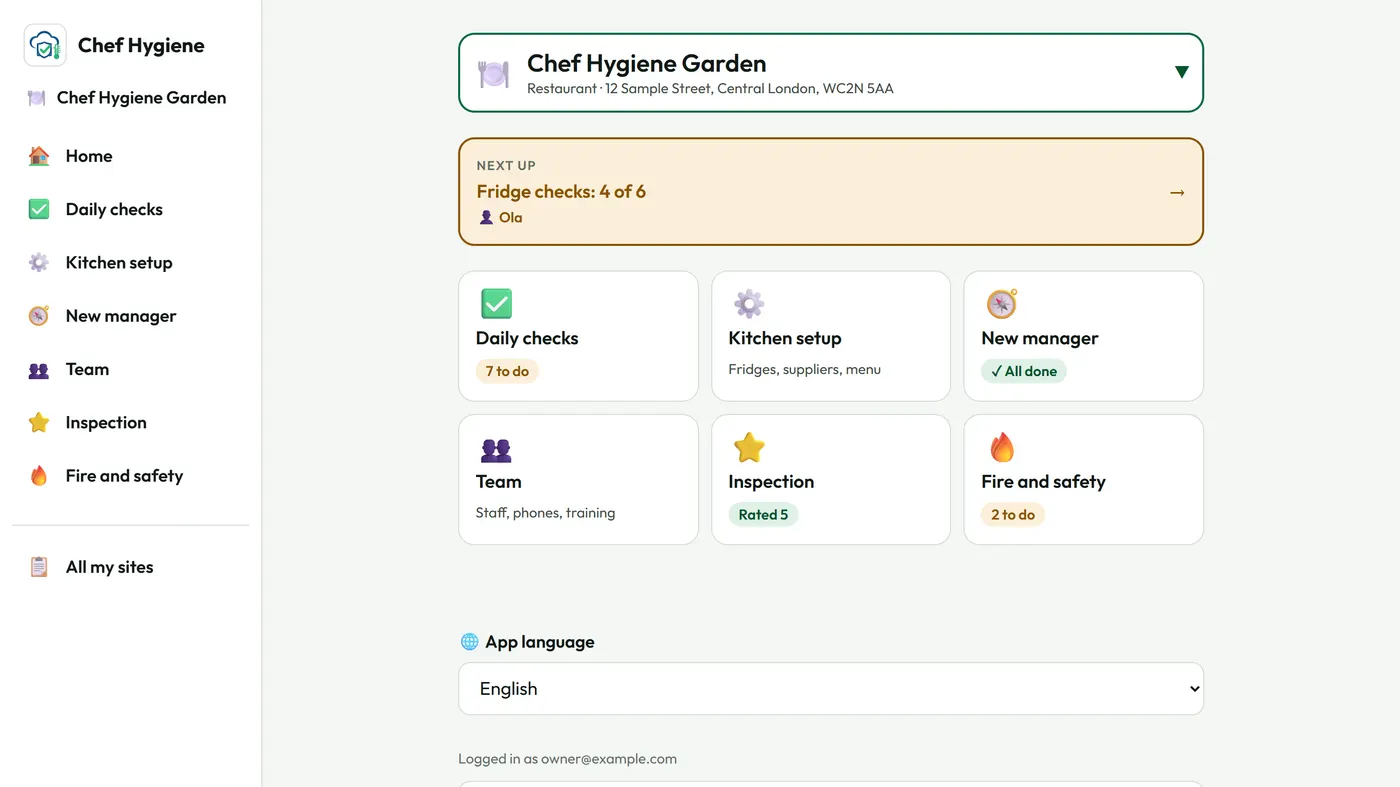
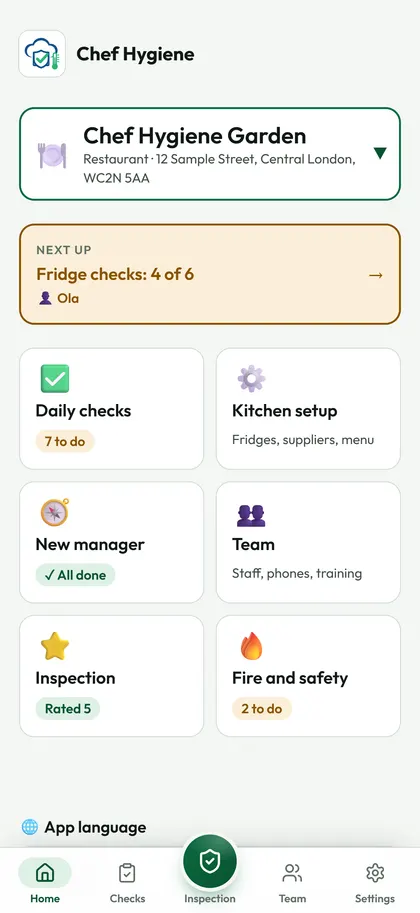
Lengyelország: élelmiszer-higiéniai szabályok
Az ezen az oldalon található szabályok egyelőre angolul vannak. Lefordítjuk őket a nyelvedre.
- Ellenőrző szerv
- State Sanitary Inspection (Państwowa Inspekcja Sanitarna, “Sanepid”)
- Nyilvános értékelés
- Nem
- Nyelvek az alkalmazásban
- Polski, English
Az Ön ellenőrzése
The State Sanitary Inspection (Sanepid) inspects restaurants. The district inspector (PPIS, working through the PSSE) approves, registers and inspects them. The provincial inspector hears appeals and sets money fines, and GIS is the national body.
Visits are based on risk, and official food controls may be unannounced. Every business keeps an inspection book (książka kontroli) and shows it at the start of each inspection. A decision orders faults to be fixed by a set date. Where life or health is in direct danger, the inspector can close the premises at once, and fines can follow.
Higiéniai besorolás
Poland has no public hygiene rating or sticker, and results for single restaurants are not published. Nothing about the inspection has to be displayed at the premises.
A „törvény” kötelező érvényű szabály. A „hivatalos útmutató” nem törvény, de az ellenőrök elvárják. Az „Chef Hygiene alapértelmezett” egy olyan érték, amelyet az alkalmazás ellenőrz, ahol egyetlen szabály sem ad meg számot.
Hőmérsékletek
- Hivatalos útmutatóNo Polish law sets fridge, hot-holding, cooling or reheating numbers for restaurants. GIS says each business sets them in its own HACCP procedure. The numbers below are official consumer guidance (GIS, Sanepid, and the WHO five keys that GIS recommends).
- Hivatalos útmutatóChilled food: below 4°C (Sanepid guidance), preferably below 5°C (WHO). A temperature on the label or from the maker applies.
- TörvényQuick-frozen food: −18°C or colder. A rise of up to 3°C is allowed only while loading and unloading and in shop cabinets (regulation of 19 September 2003, § 3).
- Hivatalos útmutatóHot food: above 60°C just before serving (Sanepid, WHO). Cooked food stays out of the fridge no longer than 2 hours at room temperature (GIS).
- Hivatalos útmutatóCooling: put cooked food in the fridge within 2 hours, preferably below 5°C (GIS, Sanepid). No temperature stages are given.
- Hivatalos útmutatóReheating: heat food to 70°C (Sanepid guidance). Chef Hygiene warns on a lower reading.
- Hivatalos útmutatóCooking: cook food to above 70°C (GIS guidance).
- Chef Hygiene alapértelmezettDeliveries: Chef Hygiene checks chilled food against 5°C when the label gives nothing. Frozen food must arrive at −18°C, with a 3°C rise allowed only while unloading.
Személyzet, képzés és egészség
- TörvényEveryone who works in contact with food needs a medical certificate for sanitary-epidemiological purposes (orzeczenie do celów sanitarno-epidemiologicznych). The employer sends the person for the tests. It has no expiry date in law (food safety act art. 59; infections act).
- Hivatalos útmutatóGIS advises new tests after diarrhoea, a long cough, contact with infected people, or return after an infectious disease. Keep the certificate in the personnel file, with a copy at work.
- TörvényFood hygiene training or instruction for all food staff and for the people running HACCP must be documented. The law sets no certificate, hours or renewal (food safety act art. 59).
- TörvénySafety-at-work (BHP) training is a separate duty: before starting work, then every 3 years for manual jobs and every 5 years for managers.
- TörvénySick staff: nobody with a disease that can pass through food, infected wounds, skin infections or diarrhoea may handle food. Staff must tell the manager at once, and the employer must take them off this work (EU Regulation 852/2004; infections act art. 10).
Allergének
- TörvényThe 14 EU allergens: cereals with gluten, crustaceans, eggs, fish, peanuts, soybeans, milk, tree nuts, celery, mustard, sesame, sulphites, lupin and molluscs.
- TörvényFor restaurant dishes, give the dish name and the full list of ingredients with the allergens shown. Give it in writing, where guests see it before ordering: a menu, board, notice or screen (MRiRW regulation of 23 December 2014, § 19).
- TörvényThe trade inspection authority (UOKiK) decided that staff answering questions does not replace the written information (decision DIH-1/57/2016).
- TörvényMenus and allergen information must be in Polish. Other languages may be added. Drinks over 1.2% alcohol need no ingredient list, but their allergens must still be given.
Tűzvédelmi ellenőrzések
- TörvényPortable fire extinguishers are inspected and maintained at least once a year, as the maker and Polish Standards say. Where there is cooking oil, you need class F. The nearest extinguisher is at most 30 m away (MSWiA fire regulation).
- TörvényFlue ducts from catering hearths are cleaned at least monthly, unless local rules differ. Ventilation ducts are cleaned at least every year, by people with chimney-sweep qualifications (MSWiA fire regulation § 34).
- TörvényGas installations and chimney, flue and ventilation ducts are checked at least once a year, with a written protocol. This is a duty of the building owner or manager (building law art. 62).
- TörvényElectrical and lightning installations are tested at least every 5 years, as part of the whole-building check (building law art. 62).
- TörvénySince 30 June 2026 a room in commercial premises where fuel is burned needs a carbon monoxide detector. It is not needed for gas cooking appliances or closed-chamber appliances.
Rekordok
- TörvényHACCP-based procedures are mandatory for all food businesses (EU Regulation 852/2004 art. 5; food safety act art. 59).
- Hivatalos útmutatóGIS says food law sets no detailed rules for a kitchen’s own checks. The business sets them, and inspectors may ask for proof that they work but cannot impose specific solutions.
- TörvényKeep training documents and medical certificates in the personnel files, with a copy at the place of work, and show them on request (food safety act art. 59).
- TörvényKeep an inspection book (książka kontroli), on paper or electronic, and show it at the start of each inspection (Entrepreneurs’ Law art. 57).
Hivatalos források
- Chief Sanitary Inspectorate (GIS)
- Sanepid approval and registration (biznes.gov.pl)
- Polish laws (Sejm, ISAP)
- State Fire Service (PSP)
- GIS answer on own checks, 15 March 2024
Checked
Ez az oldal általános információkat tartalmaz, nem jogi tanácsot. Érdeklődjön a helyi önkormányzatnál.
Lengyelország: élelmiszer-higiéniai útmutatók
A Chef Hygiene beállítása
Hozd létre fiókodat, állíts be egy közös konyhai táblagépet, és telepítsd az alkalmazást a személyzet telefonjaira – lépésről lépésre.
Lengyelország: élelmiszer-ellenőrzés
Ki ellenőrzi a konyháját, hogyan működik az ellenőrzés, és van-e közhigiéniai minősítés.
Lengyelország: élelmiszer hőmérsékleti szabályok
Az ételhőmérséklet, amelyet a konyhában be kell tartani, és az ezek mögött meghúzódó szabályok.
Lengyelország: allergének
Mit kell a konyhájának mondania az ügyfeleknek az allergénekről.
Lengyelország: a személyzet betegsége és képzése
A képzés, az élelmiszerkezelő szabályok és a beteg személyzetnek távol kell maradnia az ételtől.
Lengyelország: tűzbiztonság
Tűzbiztonsági ellenőrzések a konyhában, és milyen gyakran esedékesek.
Lengyelország: megőrizendő nyilvántartások
Azok a nyilvántartások és regisztrációk, amelyeket a konyhának meg kell őriznie.
Lengyelország: a Chef Hygiene alkalmazás
Az alkalmazás betölti ezeket a szabályokat a konyhádra vonatkozóan, ellenőrzi a nyilvántartásaidat, és bizonyítékot tárol az ellenőr számára.
Más országok
 Egyesült Királyság
 Írország
 Izland
 Egyesült Államok
 Kanada
 Franciaország
 Spanyolország
 Hollandia
 Belgium
 Portugália
 Németország
 Ausztria
 Románia
 Olaszország
 Görögország
 Dánia
Dánia Svájc
Svájc Luxemburg
 Ciprus
 Málta
Málta Svédország
 Norvégia
 Finnország
 Csehország
 Magyarország
 Horvátország
 Bulgária
 Szlovákia
 Szlovénia
 Észtország
 Lettország
 Litvánia
 Liechtenstein
 San Marino
 Gibraltár
 Monaco
 Moldova
 Andorra
 Szerbia
 Jersey
 Guernsey
 Man-sziget
 Törökország
 Montenegró
 Bosznia-Hercegovina
 Koszovó
 Albánia
 Észak-Macedónia
 Ukrajna