 英国
英国 爱尔兰
爱尔兰 冰岛
冰岛 加拿大
加拿大 法国
法国 西班牙
西班牙 荷兰
荷兰 比利时
比利时 葡萄牙
葡萄牙 德国
德国 奥地利
奥地利 波兰
波兰 罗马尼亚
罗马尼亚 意大利
意大利 希腊
希腊 丹麦
丹麦 瑞士
瑞士 卢森堡
卢森堡 塞浦路斯
塞浦路斯 马耳他
马耳他 瑞典
瑞典 挪威
挪威 芬兰
芬兰 捷克
捷克 匈牙利
匈牙利 克罗地亚
克罗地亚 保加利亚
保加利亚 斯洛伐克
斯洛伐克 斯洛文尼亚
斯洛文尼亚 爱沙尼亚
爱沙尼亚 拉脱维亚
拉脱维亚 立陶宛
立陶宛 列支敦士登
列支敦士登 圣马力诺
圣马力诺 直布罗陀
直布罗陀 摩纳哥
摩纳哥 摩尔多瓦
摩尔多瓦 安道尔
安道尔 塞尔维亚
塞尔维亚 泽西岛
泽西岛 根西岛
根西岛 马恩岛
马恩岛 土耳其
土耳其 黑山
黑山 波斯尼亚和黑塞哥维那
 科索沃
科索沃 阿尔巴尼亚
阿尔巴尼亚 北马其顿
北马其顿 乌克兰
乌克兰 美国:用于餐厅和外卖
每天都要做好接受食品检查的准备。
In the United States the app follows the FDA Food Code as your state adopted it (editions from 2005 to 2022), with your state’s own changes. Your state, county or city health department inspects.
14 天免费试用 · 每个网站统一价格 · 无合同
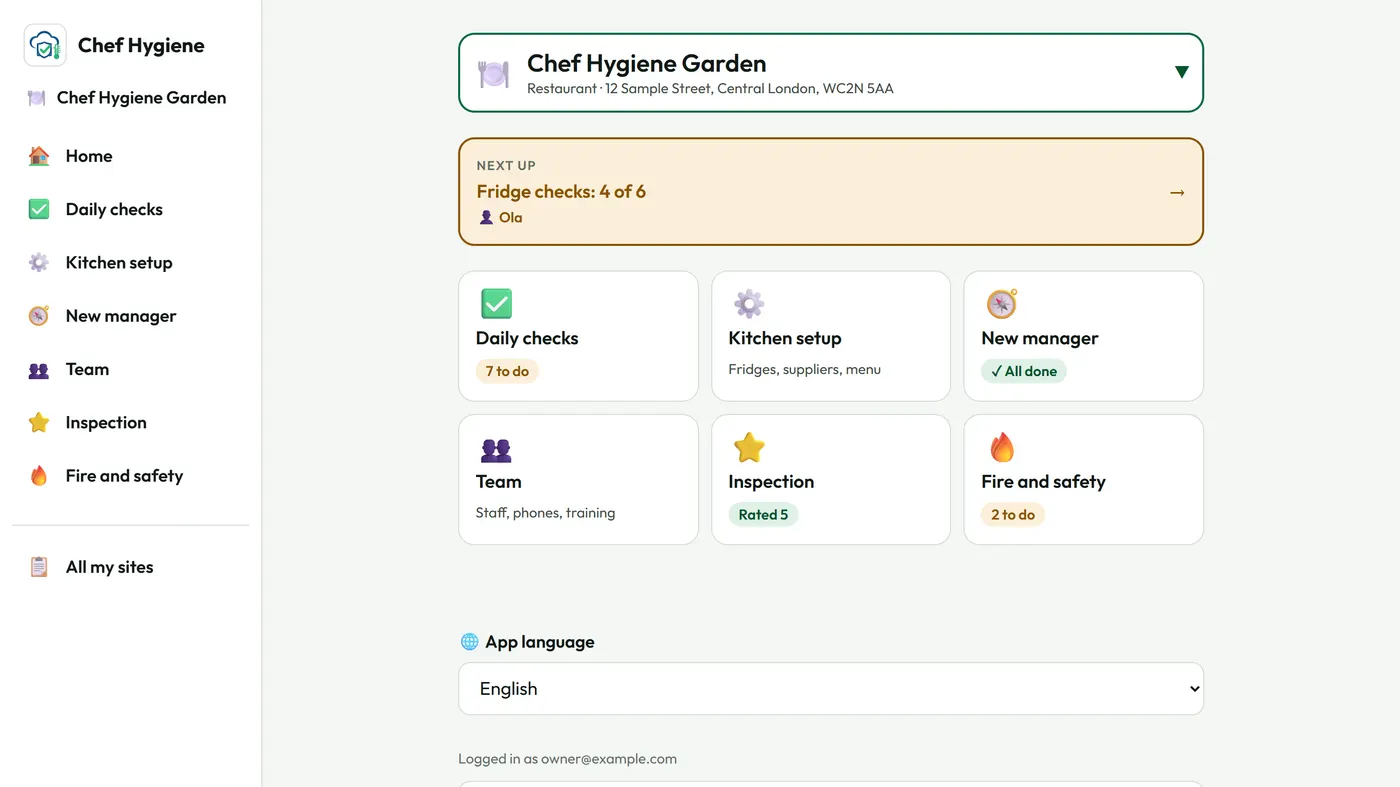
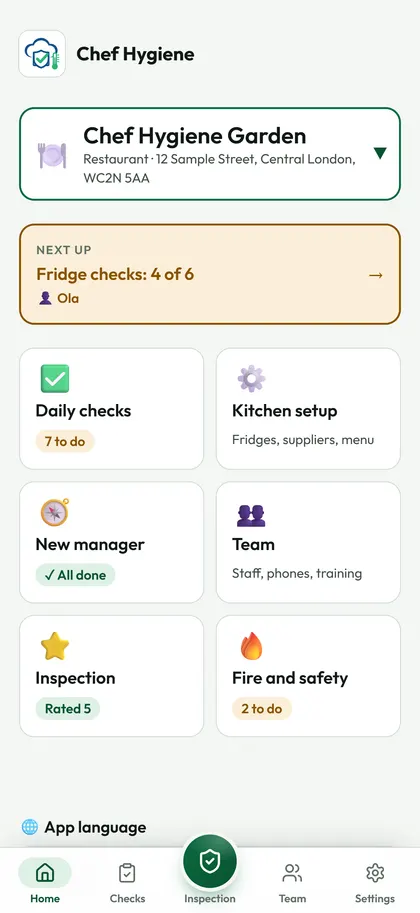
美国:食品卫生规则
本页规则目前为英文版,稍后会翻译成您的语言。
- 检查机构
- State, county or city health department (the FDA publishes the model Food Code that states adopt)
- 公众评价
- 在某些地方
- 应用内的语言
- English
您的检查
The FDA Food Code is a model, not a federal law. States adopt it in full or with changes, and a state, county or city health department inspects restaurants. The USDA covers meat, poultry and some egg products only. The local fire marshal or fire department checks fire safety.
Most inspections are not announced. The inspector can come at any reasonable time when you are open and checks your food against the Food Code edition your state adopted. You get a copy of the report. Rules differ by state, county and city.
卫生等级
There is no national grade. Some places post scores, letter grades or placards online or in the window. For example, New York City uses A, B or C, Louisiana uses a 1–5 pelican rating, and Texas has no statewide grades.
“法律”是指具有约束力的规则。“官方指南”并非法律,但检查人员会参考它。“Chef Hygiene 默认值”是指在没有规则给出具体数值的情况下,应用程序会检查的值。
温度
- 法律Cold holding: 41°F (5°C) or below. Hot holding: 135°F (57°C) or above. Roasts cooked as the Food Code allows may be held at 130°F (54°C) (Food Code 3-501.16).
- 法律Cooking for 15 seconds: 165°F (74°C) for poultry, stuffed food and wild game; 145°F (63°C) for fish, whole cuts of meat and eggs cooked to order for immediate service (Food Code 3-401.11).
- 法律Ground meat and fish, and non-intact meat: 155°F (68°C) for 17 seconds. Equal options are 150°F (66°C) for 1 minute, 158°F (70°C) for under a second, or 145°F (63°C) for 3 minutes.
- 法律Reheating for hot holding: 165°F (74°C) for 15 seconds, within 2 hours. In a microwave, reach 165°F (74°C), stir, cover and stand for 2 minutes (Food Code 3-403.11).
- 法律Cooling: from 135°F (57°C) to 70°F (21°C) within 2 hours, then to 41°F (5°C) or below within 6 hours in total. Food made from room-temperature ingredients must reach 41°F (5°C) within 4 hours (Food Code 3-501.14).
- 法律Date marking: ready-to-eat food that needs temperature control and is kept more than 24 hours must carry a consume-or-discard date. The limit is 7 days at 41°F (5°C) or below, and the day it is made counts as day 1 (Food Code 3-501.17).
- 法律Time as a public health control needs written procedures. Food can stay out for up to 4 hours, then it is thrown away. Cold food starts at 41°F (5°C) or below, and hot food at 135°F (57°C) or above. Cold food only: up to 6 hours if it never goes above 70°F (21°C) (Food Code 3-501.19).
- 法律Thaw in the fridge, under cold running water at 70°F (21°C) or below, in a microwave and then cook at once, or as part of cooking. Food thermometers must be accurate to ±2°F (±1°C).
- 法律Some places differ. New York State outside the city: cold 45°F (7°C), hot 140°F (60°C). New York City: hot 140°F (60°C). South Dakota: hot 140°F (60°C). Vermont cools in one stage, 135°F (57°C) to 41°F (5°C) within 4 hours.
员工、培训和健康
- 法律Food Code 2022: the person in charge must be a Certified Food Protection Manager (CFPM), unless the regulator treats the place as minimal risk. Older editions ask for at least one CFPM. States differ, and Hawaii did not adopt the 2022 rule.
- 法律Staff must report these symptoms: vomiting, diarrhea, jaundice, sore throat with fever, and infected cuts or boils.
- 法律Staff must also report these diagnoses: norovirus, hepatitis A, Shigella, Shiga toxin-producing E. coli, typhoid fever and nontyphoidal Salmonella.
- Chef Hygiene 默认值Food handler cards are needed where your state or city asks for them. Chef Hygiene suggests a renewal date: a manager certificate lasts up to 5 years and a food handler card usually 2 or 3 years.
过敏原
- 法律US law lists 9 major food allergens: milk, eggs, fish, crustacean shellfish, tree nuts, peanuts, wheat, soybeans and sesame. Sesame has been included since 1 January 2023 (FASTER Act).
- 法律The menu must tell customers about raw or undercooked animal foods and remind them of the risk (Food Code 3-603.11, consumer advisory).
消防安全检查
- 官方指南NFPA 96 hood inspections depend on the cooking: monthly for solid fuel (wood or charcoal), quarterly for high volume, every 6 months for moderate volume, and yearly for low volume. Many states and cities adopt NFPA 96 in their fire code.
- 官方指南Clean the hood system whenever an inspection finds grease build-up. Keep a certificate on site that shows the date, the company and any areas not cleaned.
- 官方指南Extinguishers that protect cooking appliances using vegetable or animal oils and fats must be listed for Class K fires (NFPA 10).
- 官方指南International Fire Code: commercial cooking that makes grease-laden vapors needs an automatic fire-extinguishing system (UL 300). Its manual pull station sits on the way out, 10 to 20 feet from the hood.
- Chef Hygiene 默认值Chef Hygiene checks that the hood’s fire suppression system is inspected every 6 months.
记录
- 法律OSHA: report a death within 8 hours, and an in-patient hospital stay, an amputation or the loss of an eye within 24 hours. Call 1-800-321-6742 or use osha.gov/report.
- 法律Full-service restaurants and limited-service eating places are partly exempt from keeping OSHA injury and illness records, but must still report the severe events above.
- 法律Some states run their own OSHA State Plan that covers private businesses, for example California and Oregon. A restaurant there deals with the state plan. In other states, restaurants are under federal OSHA.
- 法律Time as a public health control needs written procedures, and ready-to-eat food kept more than 24 hours needs a consume-or-discard date mark (Food Code 3-501.19 and 3-501.17).
官方消息
- FDA Food Code 2022
- FDA: Food Code adoption by states
- OSHA: report a fatality or severe injury
- OSHA State Plans
- NFPA 96 (kitchen hood cleaning)
Checked
本页面仅提供一般信息,不构成法律建议。请咨询当地政府部门。
美国:食品卫生指南
美国:Chef Hygiene 应用程序
该应用程序会加载您厨房的这些规则,对照这些规则检查您的记录,并保留证据以供检查员参考。