 United Kingdom
 Ireland
 Iceland
 United States
 Canada
 France
 Spain
 Netherlands
 Belgium
 Portugal
 Germany
 Austria
 Poland
 Romania
 Italy
 Greece
 Denmark
 Switzerland
 Luxembourg
 Cyprus
 Malta
 Sweden
 Norway
 Finland
 Czechia
 Hungary
 Croatia
 Bulgaria
 Slovakia
 Slovenia
 Estonia
 Latvia
 Lithuania
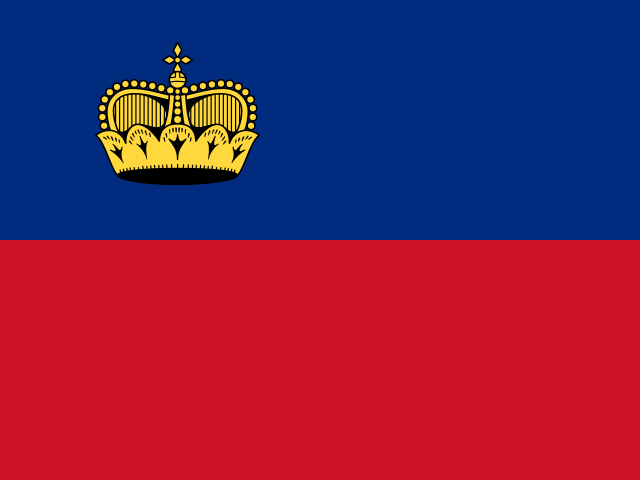 Liechtenstein
 San Marino
 Gibraltar
 Monaco
 Moldova
 Andorra
 Serbia
 Jersey
 Guernsey
 Isle of Man
 Türkiye
 Montenegro
 Bosnia & Herzegovina
 Kosovo
 Albania
 North Macedonia
 Ukraine
 Russia
 Belarus
 United Arab Emirates
 Qatar
 Saudi Arabia
 New Zealand
 Australia
 Brazil
 Singapore
 Mexico
 Japan
 Malaysia
 India
Food Safety Records in Liechtenstein: Laws and Inspections
Food safety records in Liechtenstein: Swiss food law, ALKVW inspections, no public rating, the records inspectors ask for and how digital records help.
· Chef Hygiene
Do food businesses in Liechtenstein need food safety records? Yes. Every food business must check its own food safety (the law calls this Selbstkontrolle). The check is based on HACCP principles, scaled to the risk and size of the business, and it must be documented. Liechtenstein applies Swiss federal food law through its 1923 Customs Treaty with Switzerland. The Office of Food Control and Veterinary Affairs (Amt für Lebensmittelkontrolle und Veterinärwesen, ALKVW) inspects, usually without warning. There is no public hygiene rating or sticker. This page explains the rules, what inspectors look for, where businesses go wrong, and how digital records help.
This page covers Liechtenstein. German is the official language of the country (Constitution, Art. 6), so the app works in German, and in 40 languages in all for staff. Every fact below comes from an official source, linked in the text and at the end. Where the law sets no number and a number comes from industry guidance, we say so.
## Contents
- The law: what every food business in Liechtenstein must do
- Who inspects you, and how often
- No public rating
- The records inspectors ask for
- Where businesses go wrong
- By type of business
- Why digital records help in Liechtenstein
- How Chef Hygiene helps
- A fair price, on purpose
- Less paper
- FAQ
- Official sources
## 1. The law: what every food business in Liechtenstein must do
- Swiss food law applies. Under the Customs Treaty, the Swiss federal food rules are the rules in Liechtenstein: the Foodstuffs Act (LMG, SR 817.0), the Foodstuffs Ordinance (LGV, SR 817.02), the Hygiene Ordinance (HyV, SR 817.024.1) and the Food Information Ordinance (LIV, SR 817.022.16). Liechtenstein's own Food Control Ordinance (LMKV, LGBl. 2000 Nr. 94) names these texts and adds who inspects and how the procedure works. The ALKVW legal-basis page says the same (ALKVW: legal basis; LMKV on gesetze.li).
- Trade licence first. Anyone who carries on a trade needs a licence (Gewerbebewilligung) from the Office of Economic Affairs (Amt für Volkswirtschaft, AVW). Serving food and drink in a restaurant, café, bar, snack bar or staff canteen needs a hospitality (Gastgewerbe) licence (Trade Act, GewG, Art. 7 and Art. 13). You may trade only after the licence is issued (Art. 16). Proof of fitness for hospitality is a special exam (Art. 14), and knowledge of German is one of the conditions (Art. 8) (GewG on gesetze.li).
- Tell the ALKVW. A business that produces, processes or distributes food must notify the food authority. The ALKVW receives these notifications (LMKV Art. 4, which points to Swiss LMG Art. 11 and LGV Art. 20). A restaurant that sells only to guests needs this notification, not a separate food-law authorisation. Businesses that handle food of animal origin for other businesses need an authorisation from the ALKVW.
- Self-control based on HACCP. Every food business must check its own food safety: good hygiene practice, HACCP principles scaled to risk and size, sampling, traceability, recall and documentation (LMG Art. 26; LGV Art. 74 onwards). The LGV says the self-control concept must be documented "in writing or by equivalent procedures" (LGV Art. 85).
- Temperatures: law and guidance. The law sets few plain numbers. The numbers below come from the Swiss Hygiene Ordinance where it sets one, and from the GastroSuisse restaurant guide (GVG, "Gute Verfahrenspraxis im Gastgewerbe") where it does not. The GVG is approved by the Swiss food safety office, and a business that chooses to use it must apply it fully. It is guidance, not a legal duty to use it.
- Frozen food: -18°C or colder, and the surface never warmer than -15°C. This is law (HyV Art. 25).
- Chilled food: the law sets no plain number (HyV Art. 24). The GVG says 5°C or colder for perishable food. Fish at 2°C or colder (HyV Art. 44).
- Cooking: core at 70°C or more, held at least 2 minutes (GVG). Pink meat is an exception.
- Hot holding: core at 65°C or more, for at most 3 hours (GVG). The law says only "temperatures that prevent growth" (HyV Art. 27).
- Cooling: from 65°C to below 5°C within 90 minutes (GVG). The law says "as fast as possible" (HyV Art. 27).
- Reheating: core at 70°C or more, held at least 2 minutes (GVG).
- Staff training. Staff who handle food must be supervised and instructed or trained for their work. Whoever runs the HACCP procedures must be suitably trained in HACCP (HyV Art. 22). The law sets no certificate, no hours and no renewal period.
- Staff who are ill. Anyone with an acute food-borne illness must stay out of food areas. Carriers, and people with an infected wound or skin lesion, may not handle food unless hygiene measures rule out contamination. Staff must report illness to the responsible person at once, and the responsible person reports several illnesses at once to the authority (HyV Art. 21). The law sets no number of days and no health certificate for food staff.
- Allergens. Information on the 14 allergens is required for food that is not prepacked, such as dishes in a restaurant. You can give it on the menu or on a poster. You may give it orally only if a clearly visible written notice says that the information is available on request, and your staff have the details in writing (LIV Art. 5; LGV Art. 39). The origin of meat and fish must always be given in writing (LGV Art. 39).
- Fines. Breaking the food rules can be fined up to CHF 40,000 if done on purpose and up to CHF 20,000 if done through carelessness (Swiss LMG Art. 64). Working without a trade licence is a separate offence with its own fines (GewG Art. 32).
## 2. Who inspects you, and how often
- The ALKVW. The Office of Food Control and Veterinary Affairs carries out food control.
- Regular, by risk. Every business under food law is checked "regularly and with appropriate frequency" on a risk basis (LMKV Art. 8). We could not confirm an official fixed visit schedule, so we do not give one.
- Unannounced. The ALKVW may carry out unannounced inspections, secure and seize evidence, and order measures. It has access to premises, rooms, equipment and vehicles (LMKV Art. 9).
- After a visit. You get a written result. If something is wrong, there can be a formal complaint (Beanstandung), orders to find and fix the cause, a ban on rooms, equipment or a process, and seizure of products. If health is in immediate serious danger, the business can be closed at once (Swiss LMG Art. 34 to 36, applied through LMKV Art. 4).
- Your right to object. You can object (Einsprache) to the ALKVW within 10 days. After that you can appeal (Beschwerde) to the government within 30 days (LMKV Art. 12 and 13).
## 3. No public rating
- No rating, no sticker. We found no hygiene rating, smiley, sticker or score for restaurants in Liechtenstein law, and nothing has to be displayed. We cannot prove that something does not exist, so if you want to be sure, ask the ALKVW.
- What this means for you. There is no score to raise. The aim is a visit with no faults ("keine Beanstandungen"). Good records show an inspector that your system works every day.
## 4. The records inspectors ask for
The law asks for records that fit your business and the risk. For restaurants, the GVG guide shows what that usually means:
- Temperature records for fridges, freezers, cooking, hot holding and cooling.
- Delivery records. The GVG says to keep delivery notes for at least 1 year.
- Cleaning records and what was done about problems.
- Allergen information for every dish, plus the written details your staff use.
- Supplier and traceability records. Traceability records are kept until the food has probably been eaten.
- Training records. In small places, oral instruction with a signed attendance list is an accepted way to show it.
- Your HACCP procedures, written down, with a record of when they were reviewed.
How long to keep them. We could not confirm a fixed period in the law. The self-control concept must be documented (LGV Art. 85), and HACCP records are kept for "an appropriate period". Ask the ALKVW if you are unsure.
## 5. Where businesses go wrong
Common record problems are easy to picture:
- Gaps. Days with no checks written down.
- A plan that doesn't match the kitchen. A system on paper that staff do not follow.
- No action recorded. A fridge reading above 5°C with nothing written about what was done.
- Training not shown. Staff were trained, but nothing proves it.
- Allergens only by word of mouth. Oral information is allowed only with a clearly visible written notice, and with the details written down for staff.
- No notification. Opening without telling the ALKVW, or without a trade licence from the AVW.
- Meat or fish origin missing. The origin must be given in writing.
## 6. By type of business
The food rules are the same for every food business, but the records you keep depend on what you do. We found no separate official rules for each type, so this is how the general rules apply.
- Restaurant: trade licence, ALKVW notification, daily temperature checks, cooking and hot-holding records, cooling, deliveries, cleaning, and allergen information for every dish.
- Takeaway: the same as a restaurant. We could not confirm a separate Liechtenstein rule for allergen information on phone or app orders, so ask the ALKVW.
- Café: fridges and displays, cleaning, and allergen information for sandwiches, cakes and salads.
- Bakery / cake shop: allergen information for every product, display temperatures for cream cakes, and the written origin of meat or fish in any filled product that has it.
- Dessert shop: fridge and freezer temperatures for desserts and ice cream (frozen food at -18°C or colder), and allergens for toppings and sauces.
- Pub / bar / club: the same records as a restaurant for the food you serve. The hospitality licence also covers bars.
- Community hall / venue: if you serve food as a business, the trade licence and food rules apply. We could not confirm separate rules for occasional events, so ask the AVW and the ALKVW.
- Corner shop / grocery: fridge and freezer checks, delivery checks, and allergen information for food you pack or prepare yourself.
- School / nursery kitchen: temperature and cleaning records, and careful allergen records. We found no separate official rule for school kitchens.
- Caterer / food van: the same self-control duty applies. We could not confirm a separate notification step for mobile units, so ask the ALKVW.
- Home kitchen business: the food rules do not depend on where the kitchen is. A home business that sells food must notify the ALKVW and check with the AVW whether it needs a trade licence.
## 7. Why digital records help in Liechtenstein
- The law lets you choose the form. The LGV says the self-control concept is documented "in writing or by equivalent procedures" (Art. 85). We could not find a Liechtenstein page that speaks about apps by name, so ask the ALKVW if you are unsure.
- No gaps go unnoticed. A missed check shows up the same day, not at the next inspection.
- Ready for an unannounced visit. The ALKVW does not warn you before it comes. With records on a phone you can show everything at once.
## 8. How Chef Hygiene helps
What it does:
- Daily checks for fridges, freezers, cooking, hot holding, cooling, cleaning and deliveries, with the time, the staff member's name and photos. Saved records cannot be changed; corrections are added as new records.
- Your country's rules built in, such as -18°C for frozen food, and the GVG guide numbers for the rest.
- Food safety plan. About 20 minutes: answer questions, check each method, sign it, set a review date and print it.
- Ready for inspection? Checks your last 4 weeks of records the way an inspector would and shows how many are ready.
- Inspector's visits log. Write down each visit: date, type and officer.
- Practice inspection. A free walk round of about 10 minutes, with questions for your type of business and a "Put it right" list, showing the likely result: no faults, faults to fix, or closure.
- Allergen chart and labels. Every dish against the 14 allergens, a staff view on the kitchen tablet, and labels with allergens in bold.
- Staff training records.
- Inspector pack. Print all your records as one pack, or share them by secure link.
- 40 languages. Staff can use the app in their own language, and the app is in German for Liechtenstein.
## 9. A fair price, on purpose
Chef Hygiene costs about €2.99 a month per site (about €1.99 for bakeries, dessert shops and corner shops), shown in Swiss francs in your app store; unlimited staff, no contract, 14-day free trial.
We keep the price low on purpose. We want as many food businesses as possible, from a single food van to a busy restaurant, to keep good records and pass their inspections.
## 10. Less paper
A paper diary means printed sheets every day. One daily sheet per kitchen is 365 sheets a year, before you count delivery forms, cleaning rotas and training records. Digital records mean no record books to buy and fewer printed forms to throw away. That is less paper and less waste, and nothing to store in a back office.
## 11. FAQ
### Do I legally need food safety records in Liechtenstein?
Yes. You need a self-control system based on HACCP principles, scaled to your business, and it must be documented (Swiss LMG Art. 26 and LGV Art. 74 onwards, applied through the Customs Treaty).
### Are inspections announced?
No. The ALKVW may carry out unannounced inspections (LMKV Art. 9).
### How often will I be inspected?
Regularly and by risk (LMKV Art. 8). We could not confirm a fixed schedule.
### Is there a hygiene rating in Liechtenstein?
We found none. There is no public rating, sticker or score, and nothing has to be displayed. Ask the ALKVW if you want to be sure.
### Do I need a licence to open a restaurant?
Yes. You need a hospitality (Gastgewerbe) trade licence from the AVW before you open (GewG Art. 7, 13 and 16).
### Do I have to tell the ALKVW?
Yes. A business that produces, processes or distributes food must notify the ALKVW. A restaurant that sells only to guests needs the notification, not a separate food authorisation.
### Are digital food safety records accepted?
The law says the self-control concept is documented "in writing or by equivalent procedures" (LGV Art. 85). We could not find an official page that names apps, so ask the ALKVW if you are unsure.
### How long must I keep my records?
We could not confirm a fixed period. Traceability records are kept until the food has probably been eaten. The GVG says to keep delivery notes for at least 1 year.
### What temperature must my fridge be?
The law sets no plain number. The GVG guide says 5°C or colder for perishable food, and fish at 2°C or colder.
### What temperature must my freezer be?
-18°C or colder, and the surface never warmer than -15°C. This is law (HyV Art. 25).
### What temperature should I cook and hot-hold food at?
GVG guidance: cook to a core of 70°C or more, held at least 2 minutes. Hold hot food at 65°C or more for at most 3 hours.
### Do my staff need a food hygiene certificate?
No law requires one. Staff must be supervised and instructed or trained for their work, and whoever runs the HACCP procedures must be trained in HACCP (HyV Art. 22).
### What allergen information do I need?
Information on the 14 allergens for loose food. Give it on the menu or a poster, or orally with a clearly visible written notice and written details for staff (LIV Art. 5; LGV Art. 39). Meat and fish origin must be in writing.
### Can staff work when they are ill?
Not if they have an acute food-borne illness. Carriers and people with infected wounds are banned unless hygiene measures rule out contamination (HyV Art. 21). Staff must report illness at once.
### What are the fines?
Up to CHF 40,000 for breaking the food rules on purpose and up to CHF 20,000 for carelessness (Swiss LMG Art. 64).
### How much does Chef Hygiene cost in Liechtenstein?
About €2.99 a month per site (about €1.99 for bakeries, dessert shops and corner shops), shown in Swiss francs in your app store; unlimited staff, no contract, 14-day free trial.
## 12. Official sources
- ALKVW: legal basis (llv.li)
- Food Control Ordinance, LMKV (gesetze.li)
- Trade Act, GewG (gesetze.li)
- Constitution, Art. 6 on language (gesetze.li)
- Swiss Hygiene Ordinance, HyV (Fedlex)
- Swiss Foodstuffs Ordinance, LGV (Fedlex)
Chef Hygiene keeps your food safety records in Liechtenstein ready for every inspection: